Show Them the Proof of Your Love (2 Corinthians 8)
2 Corinthians 8
This is a recap of our Bible Caller Club meeting on May 26th, 2026 over this passage. If you want to join the club and attend future meetings and study with us via phone, click here.
Context:
As we reviewed in our meeting on May 26, 2026, Paul is writing this letter after a previous "painful visit" to Corinth. He is defending his apostleship, which is one of weakness and frailty, so that God's power might be revealed, but some in Corinth were struggling to accept this. After receiving an encouraging report from Titus that the church was showing godly sorrow and repentance (chapter 7), Paul now feels able to address the practical matter of a financial collection for other believers in need, a task they had started a year prior.
1. What’s happening in this passage?
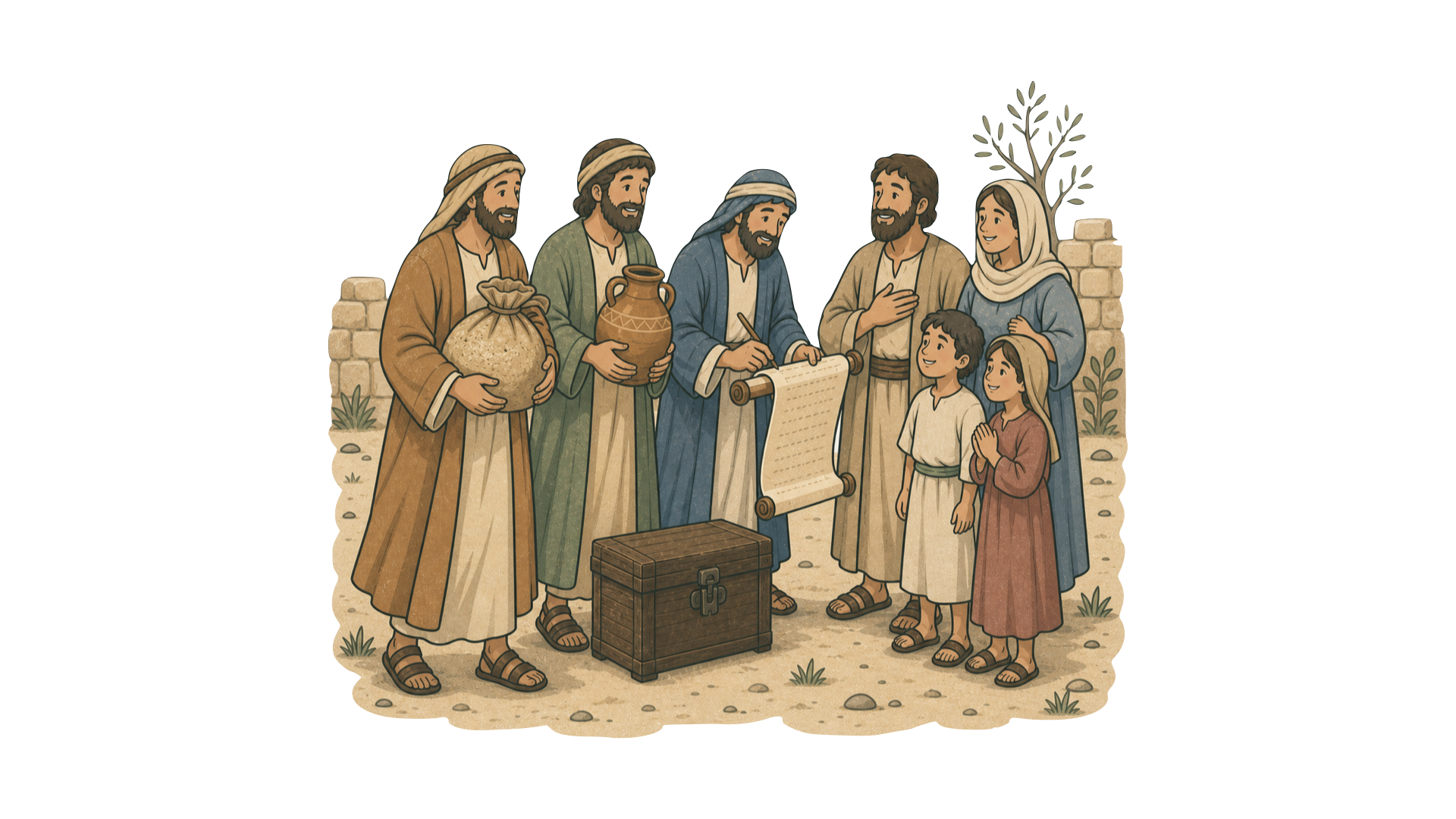
In our study tonight, we explored how Paul encourages the Corinthian church to follow through on their commitment to give financially to other struggling saints. He begins by highlighting the incredible generosity of the Macedonian churches. Despite experiencing "a great testing by affliction" and "deep poverty" themselves, their joy overflowed into rich generosity, and they actually begged for the opportunity to give (2 Corinthians 8:1-4). Paul explains he is sending Titus, along with two other trusted brothers, to help the Corinthians complete this gracious work they had begun a year ago (2 Corinthians 8:6, 10-11). He clarifies that this isn't a command, but a chance for them to prove the sincerity of their love, pointing to the ultimate example of Jesus Christ, who, though rich, became poor for our sake (2 Corinthians 8:8-9). Paul emphasizes that the gift is acceptable based on a person's readiness and what they have, not what they don't, as the goal is equality and mutual support, not burdening one group to relieve another (2 Corinthians 8:12-14). Finally, he commends the men he is sending—Titus and two unnamed brothers—as partners and messengers who are a glory to Christ, noting that one was specifically appointed to ensure complete financial transparency so that the ministry would be above reproach in the sight of both God and people (2 Corinthians 8:16-23).
2. What is God revealing about humanity?
A key insight from our discussion was that this passage reveals our capacity for incredible generosity even in the midst of our own deep poverty (2 Corinthians 8:2). How we respond in times of hardship can become a great opportunity to show love. The group noted that, as humans, we often need reminders to complete what we start, just as Paul had to remind the Corinthians to finish the collection they had eagerly begun (2 Corinthians 8:10). We also saw our need to work together in partnership. As one member pointed out, Paul didn't just work alone; Titus was his partner, and Titus himself was sent with other brothers as partners (2 Corinthians 8:18, 23). This passage also reveals a very human vulnerability: our tendency to distrust one another if things are not handled properly. Paul's careful precaution to have a brother oversee the funds shows a keen awareness that we need to be careful to do things "above board" so that we can maintain trust (2 Corinthians 8:20-21).
3. What is God revealing about Himself?
Our study highlighted several beautiful truths about God. First, it is God's grace that empowers generosity; the Macedonians' giving was a direct result of "the grace of God" given to them (2 Corinthians 8:1). It is God's will that we give of ourselves, and He is the one who puts the "earnestness in our hearts" to desire to do so (2 Corinthians 8:5, 16). The most profound revelation about God in this chapter is the sacrificial nature of Jesus. As one person summarized from the text, God, in the person of Jesus, "became poor, so that through his poverty, we may become rich" (2 Corinthians 8:9). He sacrificed everything for us. We also discussed how God promises to provide for our needs. The quote from Exodus about manna—"He who gathered much did not have too much, and he who gathered little had no lack"—was seen as a promise that God will ensure we have enough (2 Corinthians 8:15). Finally, our group saw that God is glorified when His people work together in generosity; the brothers traveling with Titus are described as "a glory to Christ" (2 Corinthians 8:23).
4. How should our lives change?
As a group, we felt this passage calls for a tangible response in our own lives. We should actively look to the positive examples of others, like the Macedonian churches, for inspiration on how we can serve and give (2 Corinthians 8:1). We are called to abound in this "gracious work" of generosity, not out of compulsion, but as a way to show the proof of our love for one another (2 Corinthians 8:7-8, 24). A key takeaway for us was the importance of follow-through; we must finish what we start and not go back on the commitments we've made (2 Corinthians 8:11). Our giving should come from a ready and willing heart, because the attitude behind the gift is what makes it acceptable to God (2 Corinthians 8:12). Furthermore, we must be careful to handle things with integrity, taking precautions to ensure everything we do is honorable not only in God's sight but also in the sight of others (2 Corinthians 8:21). Ultimately, as one person passionately stated at the end of our study, the main point is to "show the proof of your love," whether that is through financial support or in other practical ways. The question left for all of us was, "Are we showing proof of our love to one another?"