Put These Words Into Your Ears (Luke 9:37-62)
Luke 9:37-62
This is a recap of our Bible Caller Club meeting on July 14th, 2026 over this passage. If you want to join the club and attend future meetings and study with us via phone, click here.
Context:
In our Bible study on July 14, 2026, we finished Luke chapter 9. The first part of the chapter established what Jesus' kingdom looks like, showing his power and messiahship through the Transfiguration. This passage, from verse 37 to the end, focuses on the disciples' very human and flawed responses to that kingdom, highlighting their struggle to grasp its true nature.
What is happening in this passage?
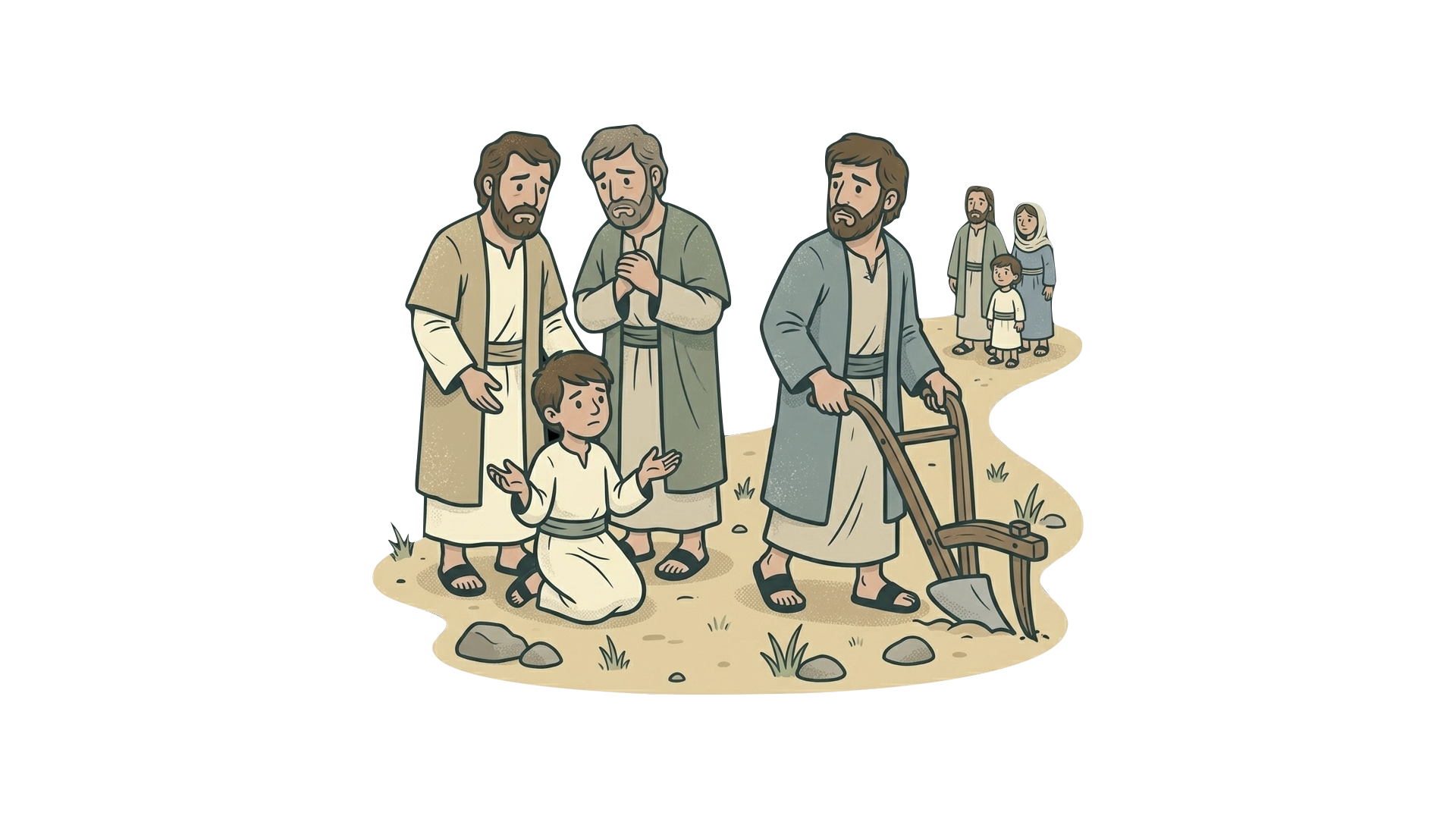
Our study covered the second half of Luke chapter 9, where a series of events reveals the disciples' deep misunderstanding of Jesus' kingdom. The passage begins the day after the Transfiguration, with Jesus healing a demon-possessed boy whom his disciples could not help (vv. 37-43). Despite witnessing this majesty, the disciples fail to comprehend Jesus' subsequent prediction of his betrayal and death, and were too afraid to ask him what he meant (vv. 44-45). This confusion quickly gives way to pride as they argue about which of them is the greatest (v. 46). In response, Jesus uses a child as an example of true greatness, which is found in humility and receiving the least in his name (vv. 47-48). The disciples' misunderstanding continues as they try to stop an outsider from casting out demons in Jesus' name (vv. 49-50) and then, when a Samaritan village rejects them, James and John ask if they should call down fire from heaven to destroy them (vv. 51-56). As the chapter concludes, several would-be followers approach Jesus, but their commitment wavers when faced with the high cost of discipleship, prompting Jesus to declare that "No one after putting his hand to the plow and looking back is fit for the kingdom of God" (vv. 57-62). As our group discussed, the central theme is the stark contrast between the disciples' desire for power and control and the kingdom's true path of sacrifice, service, and submission.
What is God revealing about humanity in this passage?
During our study, it became clear that this passage reveals some difficult truths about human nature. We saw ourselves as an "unbelieving and perverse generation" (v. 41), often slow to understand God's true purposes and quick to seek power and control for ourselves. As one club member noted, we want to look like we're in control, not Jesus. We have a tendency to want to judge and hinder people, like when the disciples wanted to call down fire on the Samaritans or stop the man casting out demons. Someone pointed out that we sometimes act like we have "exclusive rights to Jesus," creating hoops for others to jump through before we accept them. We also prioritize our own comfort and worldly concerns over Jesus' call. The examples at the end of the chapter, where people say they must first bury a father or say goodbye to family, show how we often say, "I'll follow you, but..." We want to follow Jesus when it's convenient, when we're older, or when our lives are "right," not understanding that discipleship requires immediate, unconditional commitment. Holding onto our old ways is comfortable, but Jesus calls us to leave it all behind.
What is God revealing about himself in this passage?
In our group's discussion, we saw a powerful picture of God's character in Christ. Jesus models the way of the cross: a life of total sacrifice, service, and submission. He isn't asking us to do anything he wasn't willing to do himself. He "set his face to go to Jerusalem" (v. 51), fully knowing he was going there to be killed. He came to save lives, not destroy them. We also saw the very human side of Jesus; as one member said, you can "feel the exhaustion of Jesus." He gets exasperated with the disciples' lack of understanding, asking, "how long shall I be with you and put up with you?" (v. 41). Yet, in the same breath, he shows patient mercy by healing the boy. A key point was made that this question is rhetorical, because the answer is that he will continue to put up with us. We also noted that God knows our hearts completely. As it says in verse 47, "Jesus, knowing what they were thinking in their hearts," used the moment to teach humility. We can't hide our pride or motivations from him, but he still patiently teaches and guides us toward the humble heart of a child.
How should our lives change having studied this passage?
This study challenged us to make real changes in our lives. The most pressing application is to follow Jesus now. As one person shared, we can't keep putting it off for a "perfect time" or until we get our lives right, because that time will never come. The kingdom is uncomfortable by design. We must embrace the costly way of the cross, understanding it as a life of sacrifice, service, and submission. We need to stop hindering people from coming to Jesus by inventing our own rules and judging them. As someone reminded us, we need to "accept people where they're at" because it's not our job to decide if they're ready. Instead of wishing harm on others or wanting to "rain down fire," we need to adopt Jesus' heart, which came to save, not destroy. We are called to let go of the past, put our hands to the plow without looking back, and humbly serve like a child. When we get out of the way and let God be in control, then, as we saw in the passage, we will be "astonished at the majesty of God" (v. 43).