Good Works Are Quite Evident (1 Timothy 5)
1 Timothy 5
This is a recap of our Bible Caller Club meeting on August 17th, 2026 over this passage. If you want to join the club and attend future meetings and study with us via phone, click here.
Context:
In our Bible study on August 17, 2026, we continued our journey through 1 Timothy. The overall context of the book is Paul instructing Timothy on how to establish order and godliness within the Ephesian church. This specific chapter addresses two problem groups—unruly widows and corrupt elders—by outlining who the church should honor and why, contrasting godly conduct with the sinful behavior causing issues in the congregation.
What is happening in this passage?
In our study tonight, we broke down how Paul instructs Timothy on handling different groups within the church, focusing on who deserves honor.
A Call for Family-Like Respect: Paul begins by telling Timothy how to interact with members of the congregation: treat older men like fathers, younger men like brothers, older women like mothers, and younger women like sisters, with complete purity (vv. 1-2). As one member pointed out, this establishes a family dynamic that should be born out of the love, humility, and unity that a proper faith produces. This respect is the foundation for the "honor" Paul discusses next.
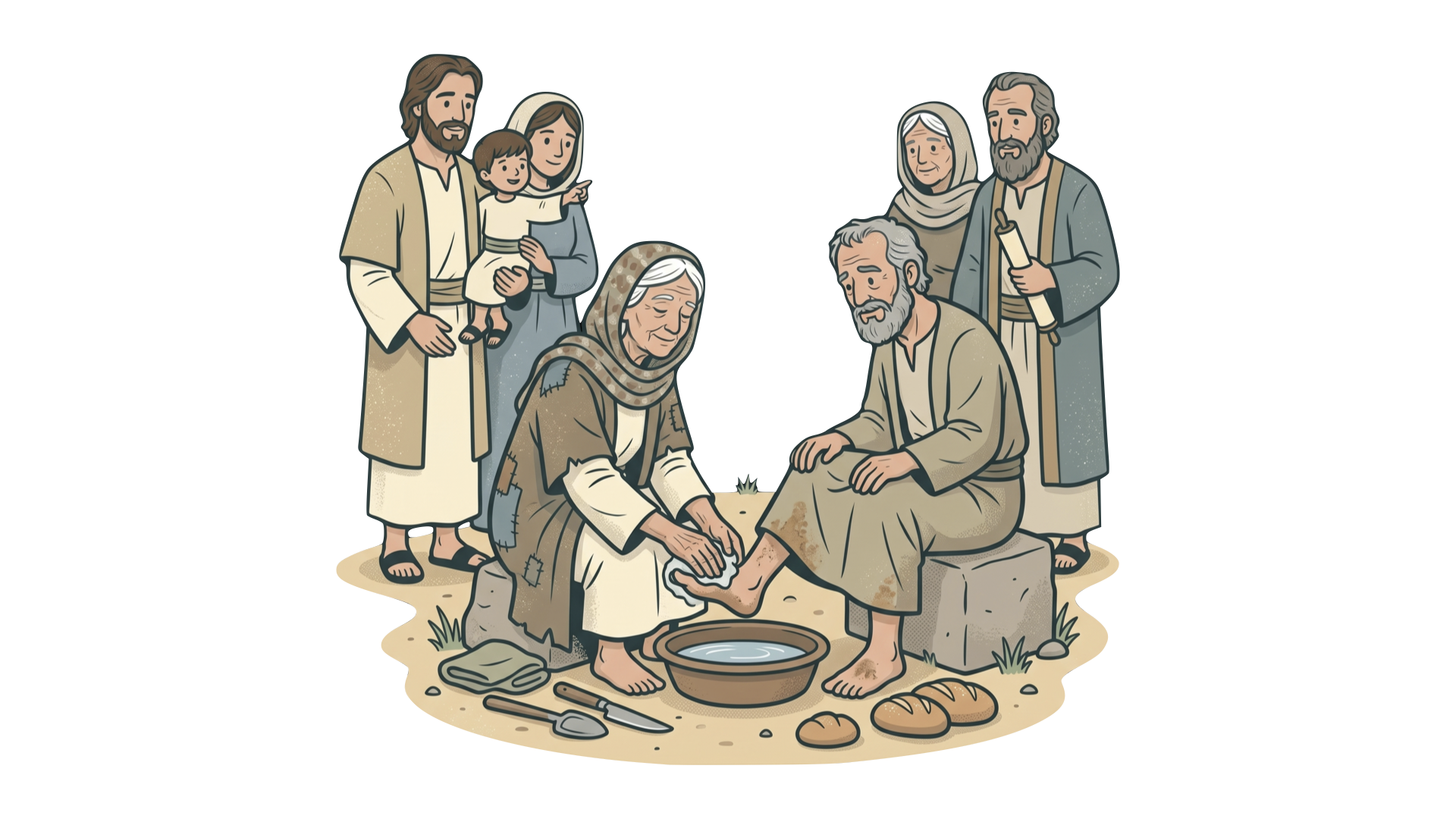
Honoring True Widows: A significant portion of the chapter details which widows the church should financially support. Paul makes a distinction between "widows indeed" and others. A "widow indeed" is one who is truly alone, has placed her hope in God, and is devoted to prayer (v. 5). The church is responsible for her. However, if a widow has children or grandchildren, it is their responsibility to care for her, as this is pleasing to God (v. 4). This prevents the church from being unnecessarily burdened (v. 16).
Qualifications for Support and Warnings Against Idleness: To be officially supported by the church (put on "the list"), a widow had to meet strict criteria: be over sixty, have been a faithful wife, and have a reputation for good works like raising children, showing hospitality, and serving others (vv. 9-10). Paul warns against supporting younger widows, as their idleness could lead them to become gossips and busybodies, eventually turning away from their commitment to Christ (vv. 11-15).
Honoring and Correcting Elders: The focus then shifts to the church leadership. Elders who lead well, especially those who work hard in preaching and teaching, are worthy of "double honor," which includes financial support (vv. 17-18). Paul also provides instructions for accountability, stating that an accusation against an elder should only be accepted with two or three witnesses (v. 19). He commands that those who persist in sin should be rebuked publicly to serve as a warning to others.
A Charge for Impartiality: Paul gives Timothy a solemn charge to follow these instructions without bias or partiality (v. 21). He concludes by noting that both good works and sins are eventually evident. Some are obvious and go ahead to judgment, while others follow later, but nothing can be hidden forever (vv. 24-25).
What is God revealing about humanity in this passage?
Our group discussion highlighted several truths about our human nature revealed in this chapter. We have a tendency to make the wrong things the main things in our lives, leading to choices that don't result in an honorable life. We are prone to partiality, wanting to apply God's standards with bias based on our personal feelings rather than on godly qualifications (v. 21). A member also noted our tendency to quickly believe negative things about others, which is why Paul warns not to accept an accusation against an elder without multiple witnesses (v. 19). One of the biggest takeaways was that "idle hands are the devil's workshop." Paul shows that when people, like the younger widows, are idle, they fall into gossip and meddling, which can lead them away from God (v. 13). Finally, we discussed how humans can be tempted to pass off their responsibilities, such as caring for family, onto the church instead of fulfilling their own duties (vv. 4, 16).
What is God revealing about himself in this passage?
Though God isn't the direct subject of every verse, we found that this passage reveals much about His character and desires. He is a God of order and purpose, not chaos, which is clear from the detailed structure He lays out for a healthy church. We learned that God values and finds it "acceptable" when families practice piety by caring for their own relatives (v. 4). He is the true source of hope, a contrast we saw between the godly widow who "has fixed her hope on God" (v. 5) and the idle women who focus on gossip. One person in our study pointed out that God holds us accountable, observing our actions and our hearts. Paul's charge to Timothy to act "in the presence of God and of Christ Jesus and of His elect angels" (v. 21) shows that God is a just observer who sees our partiality, our works, and our sins.
How should our lives change having studied this passage?
This chapter is full of practical application for our lives. The main takeaway for our group was the call to be people worthy of honor by living lives of evident good works. We should think about how our actions today are building a reputation that goes before us. As one club member pointed out, whether we are men or women, young or old, we should be living in such a way that others see us as wise, godly, and dependable. Another member, reflecting on her age, reminded us that Christians never truly retire; we must avoid idleness and stay vigilant in serving God, because if we don't fill our time with good things, something else will fill that void. Finally, we must be principled people who apply God's standards without favoritism, refuse to spread gossip, and take responsibility for our families, knowing that ultimately our actions—both good and bad—cannot be concealed.