Bear Fruit In Keeping With Repentance (Luke 3)
Luke 3
This is a recap of our Bible Caller Club meeting on July 5th, 2026 over this passage. If you want to join the club and attend future meetings and study with us via phone, click here.
Context:
In our Bible study on July 5, 2026, we continued our journey through the Gospel of Luke. After seeing God's ability to use anyone in chapter one and the theme of waiting and searching in chapter two, we arrived at chapter three, which focuses on the arrival of God's kingdom through John the Baptist's preaching and Jesus' own baptism.
1. What’s happening in this passage?
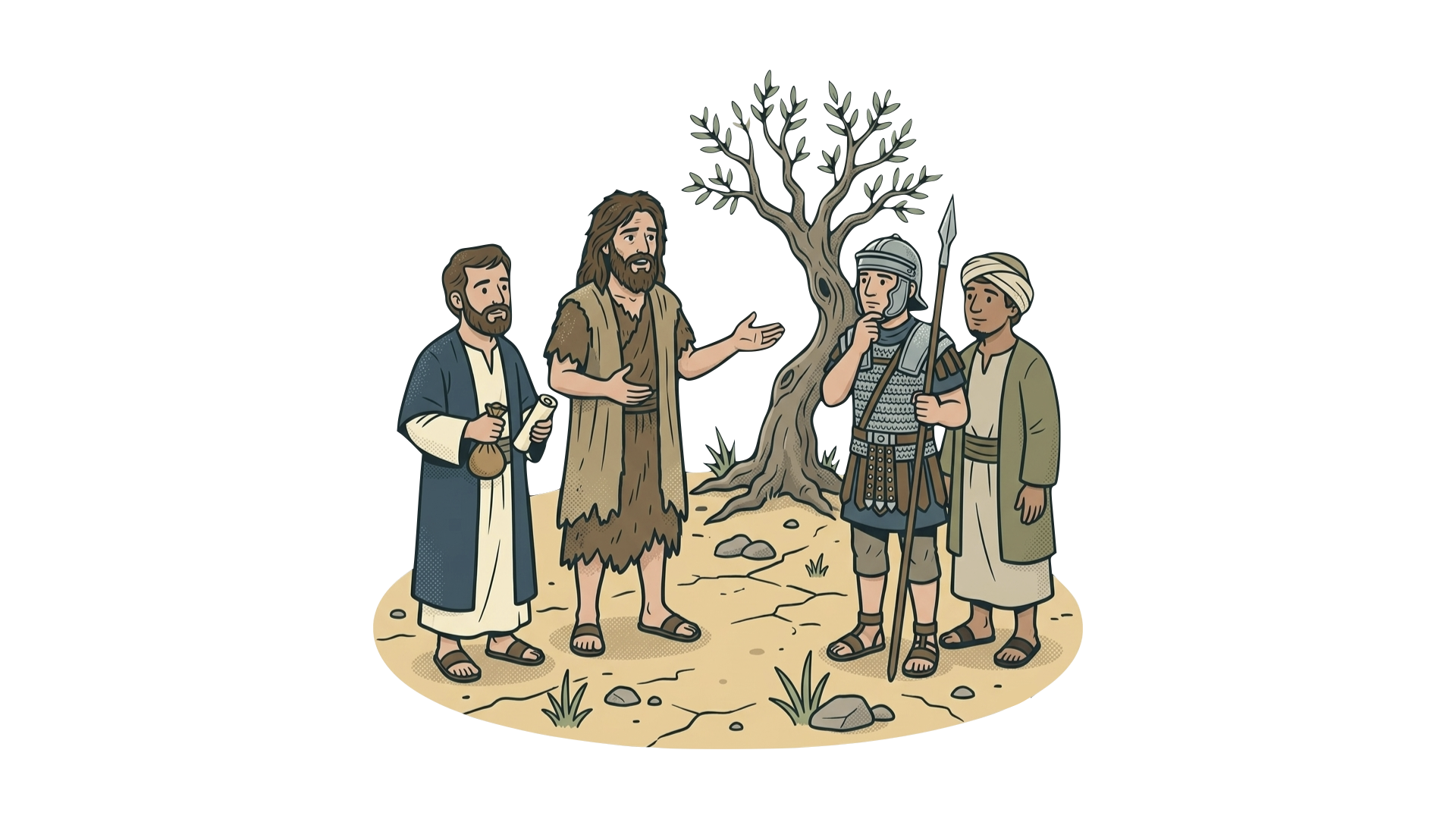
Our study tonight covered all of Luke chapter three. The chapter opens by setting a very specific historical scene, naming the rulers and high priests of the time, to establish that the word of God came to John, son of Zechariah, in a real time and place (v. 1-2). John then begins preaching a "baptism of repentance for the forgiveness of sins," fulfilling the prophecy of Isaiah to prepare the way for the Lord (v. 3-6). As crowds, including tax collectors and soldiers, came to him, John didn't hold back, calling them a "brood of vipers" and warning them not to rely on their ancestry for salvation but to "bear fruit in keeping with repentance" (v. 7-9). When the people asked what they should do, John gave practical instructions centered on generosity and fairness: share your possessions, collect only what you are owed, and don't extort money (v. 10-14). John clarified that he was not the Christ, but was pointing to one mightier than himself who would baptize with the Holy Spirit and with fire, separating the "wheat" from the "chaff" (v. 15-17). The passage then notes that Herod, having been rebuked by John, had him imprisoned (v. 19-20). Finally, Jesus himself is baptized, and as he prays, the Holy Spirit descends like a dove and a voice from heaven declares, "You are my beloved Son; in you I am well pleased" (v. 21-22). The chapter concludes with a detailed genealogy of Jesus, tracing his lineage not just to David and Abraham, but all the way back to Adam, who is called the "son of God" (v. 23-38). As one member noted, for the original Jewish audience, this genealogy was concrete proof of who Jesus was.
2. What is God revealing about humanity?
Our discussion brought out several key revelations about humanity. A member pointed out that John’s instructions to the crowds (v. 10-14) all center around sacrifice and basic human decency, which shows that "humanity without God tends to be selfish and think about only ourselves." We have a tendency to build barriers to God's kingdom by living selfishly rather than preparing a smooth path for Him in our hearts. We are also often hypocrites, claiming a heritage of faith like those who said, "We have Abraham as our father," without living out the implications of that faith (v. 8). We come to God out of a sense of self-preservation, fleeing the "wrath to come," rather than a pure desire to submit to His kingship. However, the study also revealed that despite our flaws, anyone can be used in God's plan. The long genealogy is filled with flawed, selfish individuals who were still part of God's unfolding story of salvation.
3. What is God revealing about Himself?
In our study tonight, we saw many facets of God's character. One member was struck by God's incredible knowledge and planning, noting how Luke introduces key historical figures like Pilate and Herod who would play essential roles later, and then lists the long genealogy showing God’s plan stretched all the way back to the beginning. Another person highlighted that God is compassionate and willing to forgive; though He is the ultimate judge, He offers everyone a path to be made right with Him. This mercy is at the very heart of God, as seen in the kind of "fruit" he desires from us—justice and compassion (v. 10-14). We also discussed how God wants our worship to be genuine. He could "raise up children for Abraham from these stones," but He desires a relationship with us that comes from the heart (v. 8). As one person beautifully put it, when the genealogy traces all the way back to "the son of Adam, the son of God," it shows how much God wants a relationship with all of us, His children. Finally, in Jesus's baptism, we see that God doesn't ask us to do anything He isn't willing to do Himself; He lived it first.
4. How should our lives change?
The biggest takeaway for many of us was the call to action in verses 10-14. Our lives should change as we put real time, effort, and thought into caring for others, even when it requires sacrifice. This is how we prove we are truly "bearing fruit in keeping with repentance." As one club member pointed out, our whole duty is to fear God and keep His commandments. We must actively prepare the way for the Lord's kingdom in our own hearts, clearing out the selfishness and hardness so that He can be King. Another member connected this to the genealogy, saying, "Our names are now on this list, and we need to act like our father acts." By rejecting our natural selfishness, living for others, and humbly submitting to Jesus, we bear fruit and prepare our hearts for His coming kingdom. Just as John cried in the wilderness, we are being called to "make ready the way of the Lord."