Today This Scripture Has Been Fulfilled In Your Hearing (Luke 4)
Luke 4
This is a recap of our Bible Caller Club meeting on July 6th, 2026 over this passage. If you want to join the club and attend future meetings and study with us via phone, click here.
Context:
In our Bible study on July 6th, 2026, we continued our journey through the Gospel of Luke. Our group has been tracing the theme of waiting for and searching for Jesus through the first few chapters, from the unlikely people God used in chapter one, to the shepherds, Anna, and Simeon in chapter two, and the crowds wondering about John the Baptist in chapter three. This passage in chapter four flows directly from that theme, showing us the period of Jesus's testing and the beginning of his public ministry, where some people continued to wait on and trust Him, while others flat-out rejected Him.
1. What’s happening in this passage?
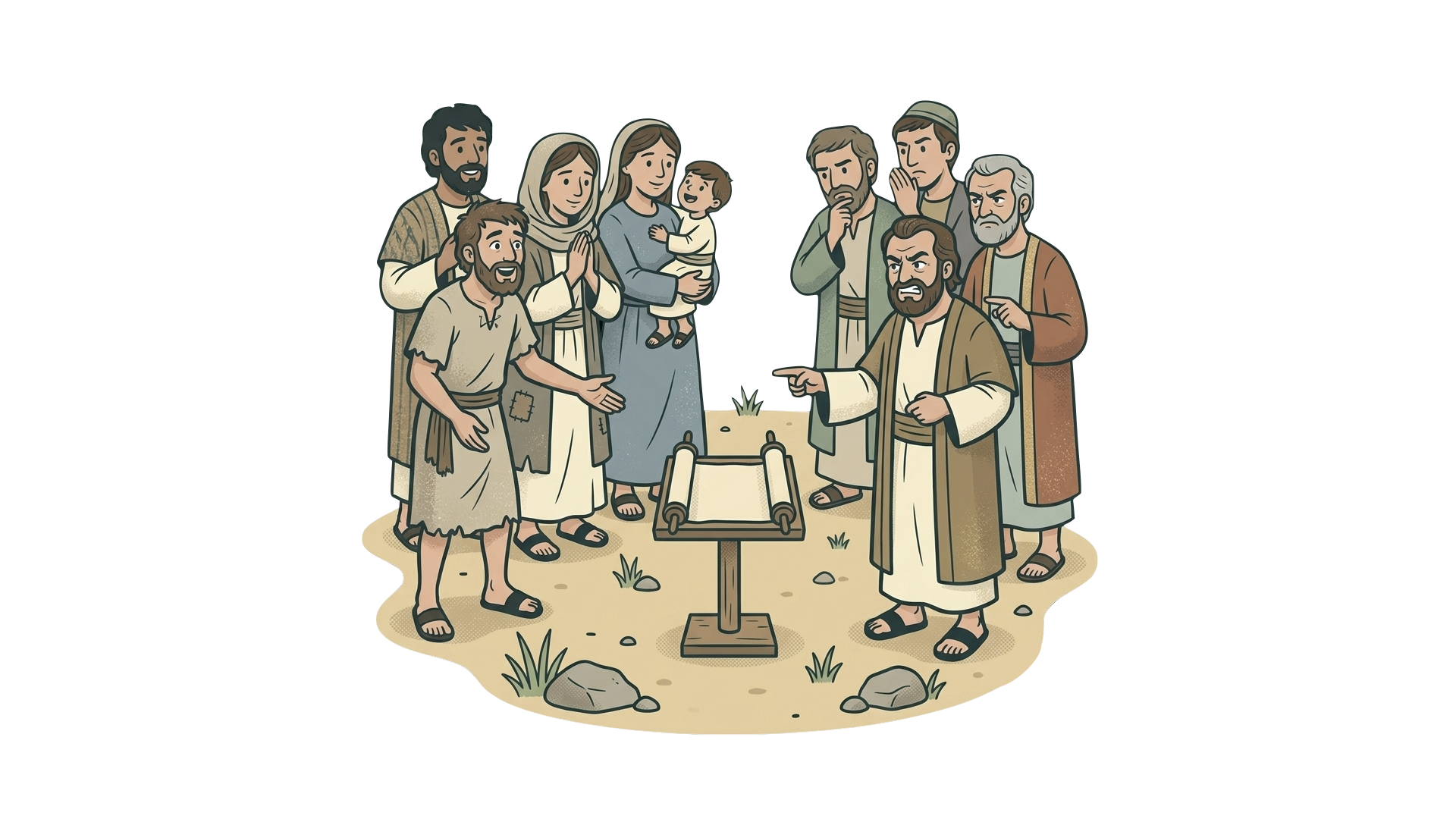
Our study began by reading through Luke chapter four, which covers a lot of ground. The chapter starts with Jesus, full of the Holy Spirit, being led into the wilderness to be tempted by the devil for forty days (vv. 1-2). As our group discussed, the devil presents three specific temptations: to turn a stone to bread, to worship Satan in exchange for the world's kingdoms, and to test God by jumping from the temple's pinnacle. Jesus counters each temptation with Scripture, and the devil leaves him "until an opportune time" (vv. 3-13). Following this, Jesus returns to Galilee in the power of the Spirit and begins teaching. He goes to his hometown of Nazareth, and in the synagogue, he reads from the prophet Isaiah, proclaiming, "Today this scripture has been fulfilled in your hearing" (vv. 14-21). Initially, the people marvel, but their attitude quickly sours when they remember he's just "Joseph's son" and he points out that God often worked through non-Israelites in the Old Testament. Enraged, they drive him out of town and try to throw him off a cliff, but he simply passes through them and leaves (vv. 22-30). In stark contrast, when Jesus goes to Capernaum, his teaching is received with amazement because of his authority. There, he casts a demon out of a man, heals Simon's mother-in-law, and then heals many others who are brought to him, staying late into the evening. The people there were so impressed they "were eagerly seeking for him" and tried to keep him from leaving (vv. 31-42). The chapter ends with Jesus declaring his purpose: "I must proclaim the good news of the kingdom of God to the other cities also, for I was sent for this purpose" (v. 43).
2. What is God revealing about humanity?
In our study tonight, we spent a lot of time reflecting on what this chapter shows us about ourselves. As one member pointed out, we often want the benefits of following God without the sacrifice, just like the people in Nazareth who wanted to see miracles but wouldn't submit to Jesus's authority (v. 23). We are all vulnerable to temptation, and the devil looks for an "opportune time" to strike (v. 13). It was noted that the very temptations Jesus faced are ones we face too: the temptation to rely on our own power instead of God's timing, the temptation to crave worldly glory, and the temptation to treat God like a "genie in a magic lamp" who exists only to serve our will. Another member highlighted the contrast between the two heart conditions seen in the chapter. The people of Nazareth, who were familiar with Jesus, had hard hearts. It's often the broken and humbled person who is ready to accept Jesus. We all are, in a sense, the "poor," "captives," and "blind" that Jesus came to save (vv. 18-19).
3. What is God revealing about Himself?
Our group had a lot to say about what we learn about God in this chapter. Right away, it was clear that God is revealing Jesus as "the Christ, the Son of God" (v. 41). Interestingly, the first to recognize this truth in the passage are the demons. Jesus also reveals himself as our example. One member emphasized how Jesus teaches us to fight temptation by using Scripture. We also see God's heart for His mission. A key verse for our group was verse 43, where Jesus states his purpose is to proclaim the good news of the kingdom. He has a purpose, and he's focused on finding those who will accept his message. He is the fulfillment of Old Testament prophecy, as he declares in the synagogue (v. 21). Throughout the chapter, Jesus acts with divine authority and power, a stark contrast to the defeated power of Satan. He gives people hope and a chance, even going to Nazareth when he knew they would likely reject him. He is humble, rejecting the temptation of worldly greatness to instead pursue his mission to die for the world.
4. How should our lives change?
The final part of our study focused on how this chapter should change us. One of the main takeaways was that we should model Jesus's commitment to his mission. Just as he said, "I have more to go do," we should have a heart for sharing the good news with others and continuing his work. To do that, we need to follow His example in fighting temptation. As one club member pointed out, "If we don't know Scripture, and if we don't have a good prayer life, we're going to be weak." We must make studying Scripture our custom, just as it was for Jesus. Another member brought up a powerful point about how the people of Nazareth rejected Jesus because of familiarity. We were challenged not to discount people in our own lives or churches because we know them well, but to show them the respect they deserve. The ultimate lesson from our study was clear: We must choose to be like Capernaum, not like Nazareth. We should eagerly seek Jesus for his healing and accept his kingdom, letting it define our lives rather than trying to make it fit our own expectations.