Love From a Pure Heart (1 Timothy 1)
1 Timothy 1
This is a recap of our Bible Caller Club meeting on August 13th, 2026 over this passage. If you want to join the club and attend future meetings and study with us via phone, click here.
Context:
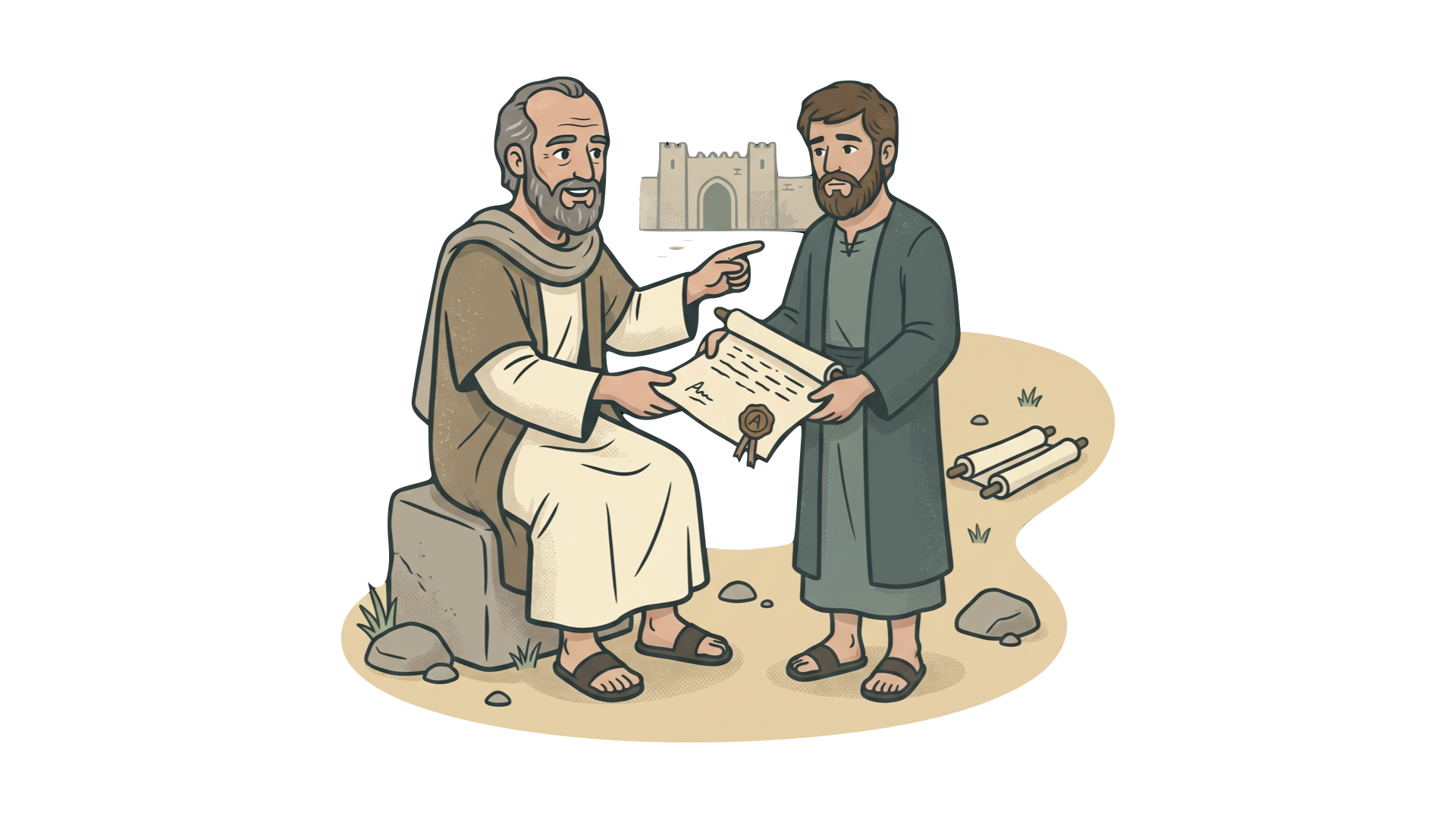
On the evening of August 13, 2026, our Bible study group dove into the first chapter of 1 Timothy. The overall context, as explained from the text, is that Paul wrote this letter to his mentee Timothy to address false teachings that were causing division and confusion in the church at Ephesus; this specific passage serves as Paul's opening charge, instructing Timothy on how to confront these teachers by contrasting their fruitless arguments with the transformative power of the true gospel.
What is happening in this passage?
In our study tonight, we broke down the opening chapter of 1 Timothy. It was a great discussion where several members shared their insights on what was taking place in the text.
Paul begins with a personal greeting to Timothy, whom he calls his "genuine child in the faith," immediately establishing their trusted relationship (1 Timothy 1:1-2). As one member noted, this shows us right away that Paul trusts Timothy with the important task ahead. Paul then gives his main instruction: Timothy is to remain in Ephesus to command certain people to stop teaching false doctrines (1 Timothy 1:3).
The specific problem with the false teaching is highlighted. The teachers were obsessed with "myths and endless genealogies," which only led to speculation instead of furthering God's work (1 Timothy 1:4). Paul contrasts this by stating the true goal of his command: "love from a pure heart and a good conscience and an unhypocritical faith" (1 Timothy 1:5). What the false teachers were doing was causing division, not producing love.
Paul then clarifies the proper use of the law (1 Timothy 1:8-11). We discussed how this section, which at first might seem out of place, directly confronts the false teachers who wanted to be experts in the law but were misusing it (1 Timothy 1:7). Paul explains that the law's true purpose isn't for endless debates but to confront sin and reveal our need for a savior, listing various sins to make his point.
To illustrate the transformative power of the gospel, Paul uses his own life as the prime example (1 Timothy 1:12-17). He openly calls himself the "foremost" of sinners, a former "blasphemer and a persecutor and a violent aggressor" (1 Timothy 1:13, 15). He explains that he was shown mercy and transformed by God's abundant grace, serving as an example to show God's patience for all who would believe.
Finally, Paul recommits his charge to Timothy, encouraging him to "fight the good fight" by holding onto his faith and a good conscience (1 Timothy 1:18-19). He warns that some have rejected this, leading to a "shipwreck" of their faith, and even names two such individuals, Hymenaeus and Alexander (1 Timothy 1:19-20).
What is God revealing about humanity in this passage?
One of the first things a club member pointed out is that we, as humans, can suffer a "shipwreck in regard to our faith" (1 Timothy 1:19). This can happen if we lose sight of what's truly important and get caught up in "endless things," as the false teachers did. We can also tend to be rule-followers for the wrong reasons, using the law to be judgmental of others instead of allowing it to confront our own sin. As another member shared, we have a tendency to twist God's Word to fit our own feelings and needs, making it about ourselves rather than allowing it to shape us into God's image. This was happening with the debates over genealogies then, and we can see it happening in our world today. Ultimately, the passage shows that humanity is prone to straying into fruitless speculation, but our true purpose is to be transformed by God’s mercy from sinners into living showcases of His grace.
What is God revealing about himself in this passage?
Our group found this passage rich with revelations about God's character. One member summarized it beautifully by pointing to verse 14, which shows us that God’s grace and love are "more than abundant." He is the one extending grace and mercy, even when we are deep in sin, just as Paul was. Another member added to this, noting that God showed Paul mercy because he "acted ignorantly in unbelief" (1 Timothy 1:13). This highlights that God desires and responds to a pure heart. When God sees a pure heart, He provides strength and puts us into His service (1 Timothy 1:12). The passage culminates in a powerful declaration of who God is: "the King of the ages, immortal, invisible, the only God" (1 Timothy 1:17), a merciful Savior whose grace is powerful enough to transform even the "foremost of sinners."
How should our lives change having studied this passage?
As we concluded our study, we focused on how this chapter should impact our daily lives. A key takeaway for our group was that we must not just study the Bible as a historical document but allow His word to transform us. We need to use it like a mirror, letting it reflect our hearts and show us where we need to change, rather than using it to point fingers at others. We must fight the "good fight" (1 Timothy 1:18), which we understood to be an internal battle of faith, fighting the desire to misuse God's word with pride and instead approaching it with a pure heart. As one member said, verse five is a great model for us: we need to ensure our own faith is sincere and that we teach others with love from a pure heart and a good conscience. We should be like Paul, openly sharing our story of how God's mercy has changed us, becoming a living showcase of His amazing grace.