Presented Without Spot or Wrinkle (Ephesians 5:22-33)
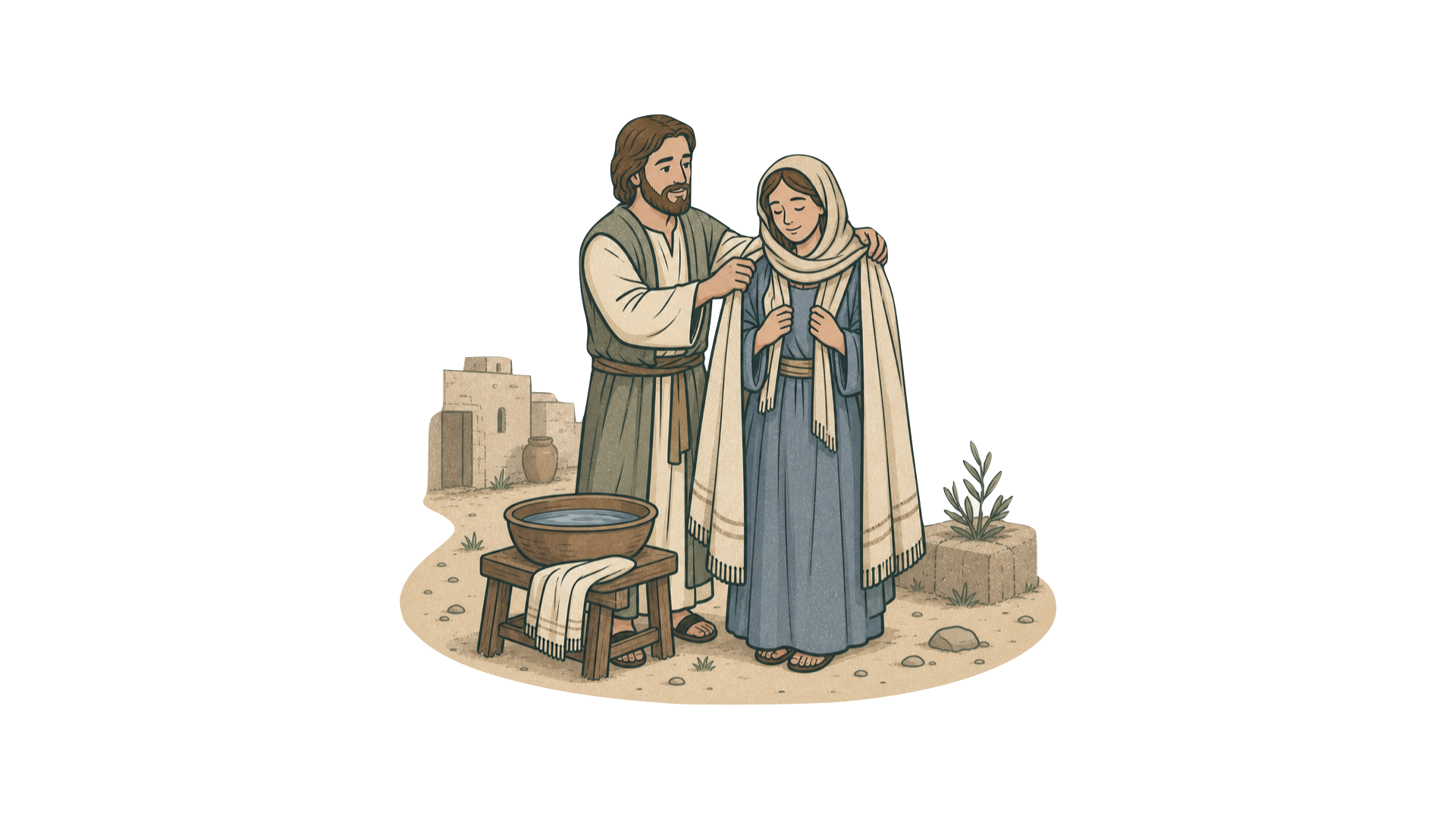
Ephesians 5:22-33
This is a recap of our Bible Caller Club meeting on June 18th, 2026 over this passage. If you want to join the club and attend future meetings and study with us via phone, click here.
Context:
In our Bible study on June 18, 2026, we continued our journey through the book of Ephesians. The group is working through how to live a life "filled with the Spirit," a theme from earlier in chapter five, which includes living in subjection to one another. This specific passage flows directly from that idea, as Paul gives the relationship between husbands and wives as the first practical example of what mutual subjection looks like.
1. What’s happening in this passage?
In our study tonight, we explored Paul's instructions for husbands and wives, which he frames as a profound illustration of the relationship between Christ and the church. The passage begins by calling wives to be subject to their husbands in obedience, just as the church is subject to Christ (Ephesians 5:22-24). As one club member pointed out, this isn't about one person being greater, but about a specific role within the relationship. Then, Paul instructs husbands to love their wives just as Christ loved the church, which involved a sacrificial love where He gave Himself up for her (Ephesians 5:25-30). Finally, Paul quotes from Genesis, explaining that the "one flesh" union of marriage is a great mystery that ultimately refers to Christ and the church (Ephesians 5:31-33). Our group discussed how this shows that the biblical model of marriage is intended to be an object lesson, teaching us about the deep, covenantal bond between Jesus and His people.
2. What is God revealing about humanity?
During our discussion, several truths about humanity stood out. A key theme we noticed is that everyone is called to a life of subjection, not self-rule. As one person put it, we each have to put others first in our different roles. This applies not just to wives, but to husbands as well, who are called to a radical, sacrificial subjection. We also discussed our own inability to perfect ourselves. The passage states that Christ is the one who sanctifies the church, cleansing her so she can be presented to Him "having no spot or wrinkle" (Ephesians 5:26-27). This was a powerful reminder for our group that while we see our own flaws and scars, God, through Christ, sees us as spotless and blameless. It highlighted our complete reliance on God's grace for our sanctification.
3. What is God revealing about Himself?
Our study revealed several beautiful aspects of God's character. We saw clearly that Christ is the head of the church and also its Savior (Ephesians 5:23). He doesn't just lead, He rescues. His love for the church is active and sacrificial; He "gave himself up for her" (Ephesians 5:25) and now "nourishes and cherishes" her (Ephesians 5:29). One of the most profound takeaways for our group was understanding that God views His relationship with the church as a marriage—a covenantal relationship, not a transactional one. We often fall into the trap of thinking "if I do this, God will do that," but this passage shows God desires a relationship built on faithfulness, love, and mutual sacrifice. As someone in the study mentioned, it’s amazing how God intentionally embedded this beautiful illustration of His love for us into the very fabric of human life through marriage.
4. How should our lives change?
As we concluded our meeting, we talked about how this passage should change us. On a practical level, for those of us who are married, it's a call to embrace mutual subjection: wives in obedience and husbands in sacrificial love. But the application goes much deeper. One member noted that if our relationship with God is like a marriage, the most powerful application is to ask ourselves if we are remaining faithful to Him, or if we are letting the busyness of the world pull us away, much like the Ephesians who had "lost their first love" (Revelation 2:4). Others pointed out that just as a man leaves his parents to become one with his wife, we are called to leave behind worldliness, sin, and our old selves to be united with Christ (Ephesians 5:31). We must be willing to put something behind us to truly put God first. This passage challenges us to uphold the biblical model of marriage as the true reflection of Christ's love and to live lives that are ready to be presented to Him, spotless and pure.