Be Strong in the Lord and in the Might of His Strength (Ephesians 6)
Ephesians 6
This is a recap of our Bible Caller Club meeting on June 19th, 2026 over this passage. If you want to join the club and attend future meetings and study with us via phone, click here.
Context:
In our Bible study on June 19, 2026, we concluded our series on the book of Ephesians. This final passage wraps up the Apostle Paul's letter by urging believers to stand firm in a spiritual battle, flowing directly from his earlier instructions on how to live out our faith in unity, love, and subjection to one another in the fear of Christ.
1. What’s happening in this passage?
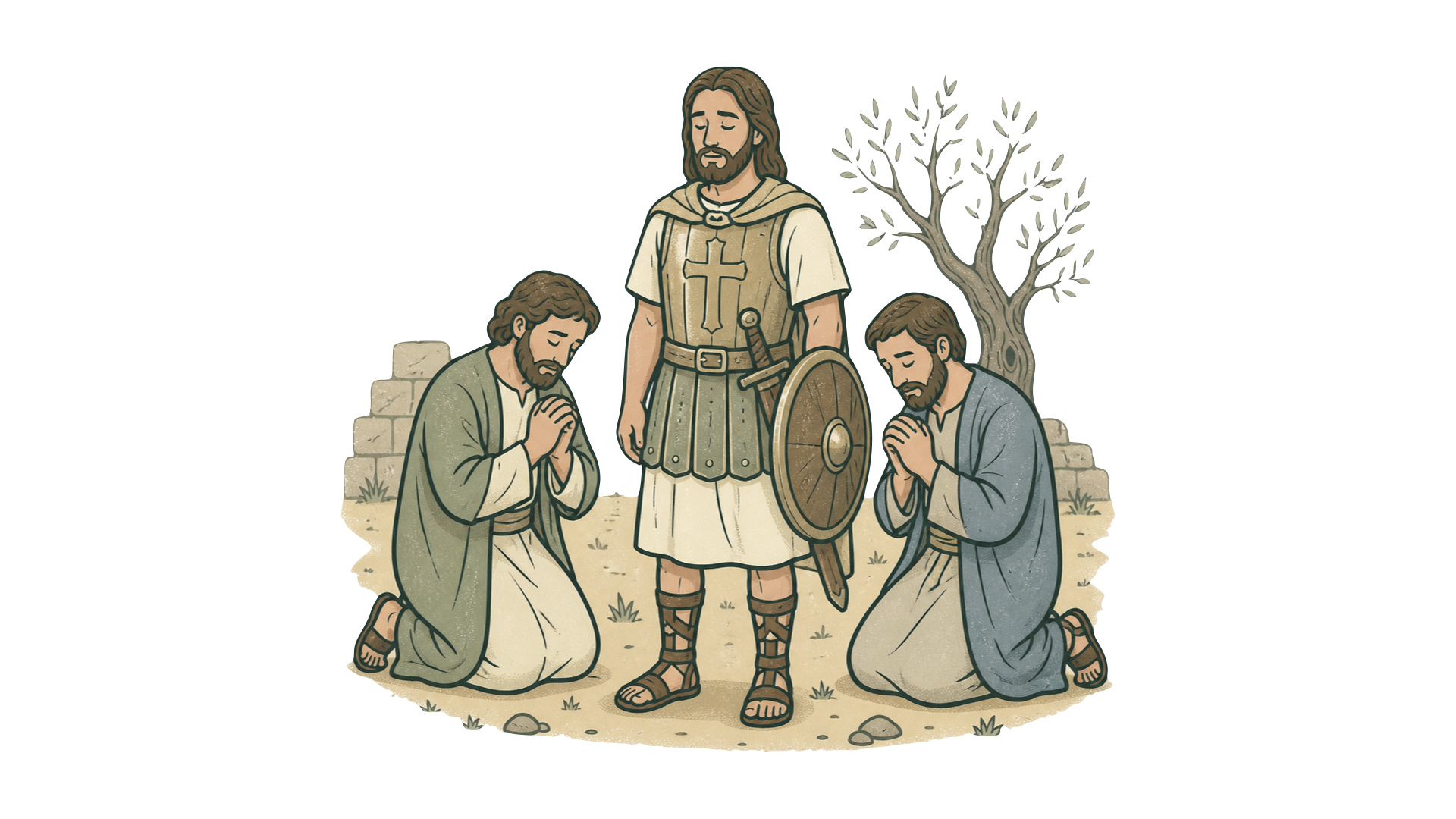
In our study tonight, we examined the final chapter of Ephesians. The chapter opens with instructions on mutual subjection within family and work structures. Children are told to obey their parents, which is described as the first commandment with a promise for a long and good life (vv. 1-3). Fathers are then instructed not to provoke their children but to raise them in the Lord's discipline (v. 4). The passage then addresses slaves and masters. Slaves are to obey their earthly masters with integrity and sincerity, as if serving Christ himself and not just as "men-pleasers" (vv. 5-8), while masters are commanded to treat their slaves well, giving up threats and remembering they both share the same impartial Master in heaven (v. 9). As a group member pointed out, the key takeaway is that no matter our role, we are all called to live in subjection to one another out of reverence for Christ. The focus then shifts to a call to "be strong in the Lord," not in our own power (v. 10). Paul introduces the metaphor of the "full armor of God," which believers must put on to stand against the devil's schemes, emphasizing that our real battle is not with people but with spiritual forces of darkness (vv. 11-13). The group discussed each piece of the armor: the belt of truth, the breastplate of righteousness, shoes of the gospel of peace, the shield of faith for protection against Satan's "flaming arrows," the helmet of salvation, and the sword of the Spirit, which is the Word of God (vv. 14-17). The passage concludes with a call to be alert and to pray constantly for all the saints and for Paul himself, that he might speak boldly as an ambassador in chains (vv. 18-20). Finally, he sends personal greetings through Tychicus and closes with a blessing of peace, love, faith, and grace for all who love Jesus with an "incorruptible love" (vv. 21-24).
2. What is God revealing about humanity?
In our study tonight, we found several key truths about our human nature. The discussion highlighted that this chapter reveals our profound need for an external source of power. We learned that our strength doesn't come from ourselves; if we think we are strong on our own, we will fail (v. 10). One of the main things we discussed is our tendency to focus on the wrong battles. As a club member shared from a personal conversation, we often pour our strength into physical and worldly problems that "really don't matter," distracting us from the real spiritual conflict. We also discovered our tendency to be "men pleasers," more concerned with what others think or how our actions benefit us personally than with serving God sincerely (v. 6). The passage shows our vulnerability to deception and our tendency to lose our way, which is why we are commanded to have an "incorruptible love" (v. 24). As one person put it, we sometimes avoid asking for prayer because "we don't want people to know our weaknesses," yet this passage shows our deep need for mutual support and encouragement. Even the Apostle Paul needed prayers, showing that every Christian, no matter their position, needs support.
3. What is God revealing about Himself?
Our group observed that God reveals Himself as our source of true power and protection. A major point raised was that the call to be strong is "in the Lord and in the might of His strength" (v. 10), a powerful reminder that our strength is not our own. God doesn't leave us defenseless; He is the one who provides everything we need. As a participant noted, the armor is called the "armor of God" because it is His armor, not ours, and He gives us the truth, righteousness, peace, faith, salvation, and His Word to protect us (vv. 10-11). Furthermore, the passage reveals God as an impartial Master who sees beyond earthly hierarchies. He is the Master of both the earthly master and the slave, and He treats everyone equally (v. 9). When we serve other people, even in our daily jobs, God sees it as if we are serving Him directly (vv. 5-7). He is a God who repays us for the good we do for others (v. 8) and who works through the unity and petitions of His people, as seen in Paul’s request for prayer.
4. How should our lives change?
As we concluded our meeting, we reflected on how this powerful chapter should change us. A key takeaway was the call in the final verse to have an "incorruptible love" for Jesus (v. 24), a love that is our own and not based on someone else's relationship with God. Another important application came from Paul's example. One member shared that if an apostle like Paul was not afraid to ask for prayer and help, then we shouldn't be either; we need to be humble enough to ask for prayer when we need strength. We must also take the "schemes of the devil" more seriously. As one member said, realizing these spiritual attacks are real helps us take our own walk with God more seriously and recognize when a physical struggle is actually a spiritual attack. We also challenged ourselves to view our service differently—to see it as serving God directly, which can help us stop thinking about personal benefit and instead serve selflessly. Ultimately, this passage is a powerful call to action: to stay alert, to intentionally "put on the full armor of God" daily, and to constantly be in prayer for one another, knowing that this is a vital part of standing firm together.