My Grace Is Sufficient for You (2 Corinthians 12)
2 Corinthians 12
This is a recap of our Bible Caller Club meeting on May 30th, 2026 over this passage. If you want to join the club and attend future meetings and study with us via phone, click here.
Context:
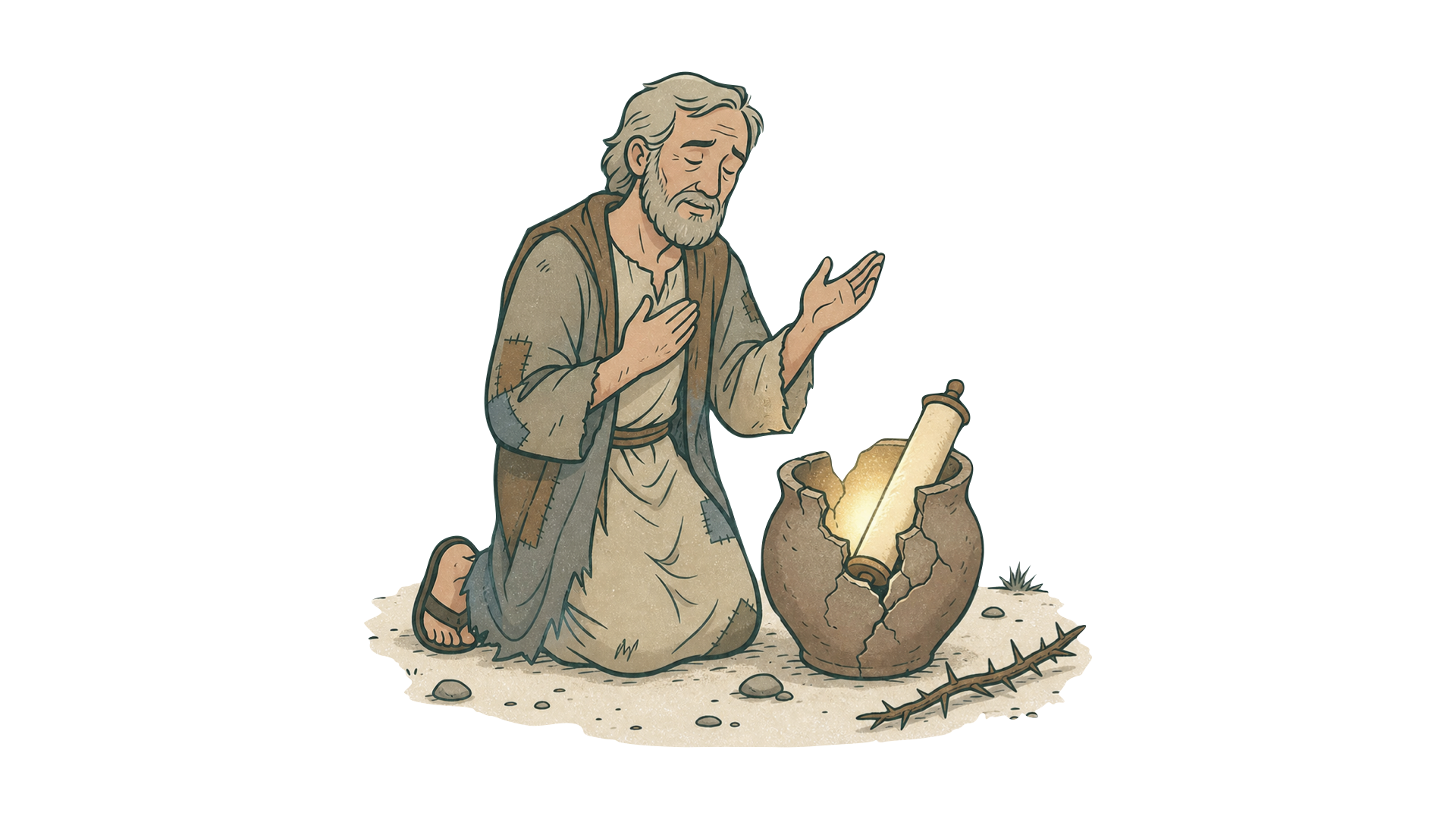
In our Bible study on May 30, 2026, we saw how Paul's relationship with the Corinthian church is strained; they found him unimpressive in person and were questioning his apostolic authority. As we entered chapter 12, the group noted that this is where Paul seems his most raw and emotional, concluding his argument against the "super-apostles" who boasted in their own strength.
1. What’s happening in this passage?
In our study tonight, we explored Paul’s complex and emotional address to the Corinthian church in 2 Corinthians chapter 12. The passage begins with Paul feeling compelled to boast, a communication style he recognizes the Corinthians respond to, yet one he clearly dislikes (2 Corinthians 12:11). He reluctantly speaks of a profound spiritual experience, being "caught up to the third heaven" where he heard "inexpressible words" (2 Corinthians 12:2-4). However, as one club member highlighted, Paul quickly pivots from this potential boast to discuss his "thorn in the flesh," a "messenger of Satan" that God allowed to keep him from becoming conceited because of these amazing revelations (2 Corinthians 12:7). We noted how deeply this afflicted him, as he pleaded with the Lord three times for it to be removed (2 Corinthians 12:8). God’s answer was not to remove the suffering, but to provide a greater promise: "My grace is sufficient for you, for my power is perfected in weakness" (2 Corinthians 12:9). This led Paul to a profound change in perspective, declaring he would gladly boast in his weaknesses so that Christ's power may rest on him (2 Corinthians 12:9). The second half of the chapter reveals Paul's deep pain and frustration. He questions if he is to be loved less simply because he loves them more (2 Corinthians 12:15) and sarcastically addresses their accusations that he was being deceitful (2 Corinthians 12:16). He ends the chapter expressing his fear that when he visits them again, he will find them unrepentant, still consumed by strife, jealousy, gossip, and immorality, which would humiliate him and cause him to mourn (2 Corinthians 12:20-21).
2. What is God revealing about humanity?
Our discussion highlighted several truths about human nature revealed in this chapter. A key observation was that when our relationships are not built on the foundation of the gospel, we become skeptical and suspicious of each other's motives, just as the Corinthians were toward Paul (2 Corinthians 12:19). Another member pointed out that humanity naturally gravitates toward exalting the self and focusing on outward power, rather than humbling ourselves to exalt God. The Corinthians looked down on Paul for his perceived weakness, missing the "upside down" nature of God's kingdom. We also noted that, like Paul, we may all have "thorns in the flesh"—struggles that God allows in our lives to keep us humble and dependent on Him. As one club member pointed out, when bad things happen, people often get angry at God instead of accepting the situation and finding strength in it. We often try to hide our weaknesses, putting up walls and a veneer of perfection which prevents us from truly connecting with others and experiencing God's power. An unrepentant heart clinging to impurity and sensuality will always produce relational chaos, like strife, slander, and arrogance (2 Corinthians 12:20-21).
3. What is God revealing about Himself?
During our study, we saw that this passage reveals God's character in profound ways. First and foremost, God's power is "perfected in weakness" (2 Corinthians 12:9). One person shared the insight that God's power cannot fully dwell in someone who is filled with pride; we must empty ourselves of "self" before we can be filled with Jesus, much like the "jars of clay" imagery from chapter 4. God's grace is shown to be completely sufficient for us, even in our most painful struggles. He may not remove our "thorn," but He provides the strength we need to endure it. One person shared that God sometimes tests us to see how we will respond to hardship—whether we will accept our weaknesses and still give Him glory. It was also noted that God permits Satan to afflict believers, not to harm them, but to humble them and ultimately glorify Himself. It's like pruning a plant; it may seem harsh, but it's for the plant's ultimate health and fruitfulness. Finally, as we seek God earnestly, He reveals Himself to us on a deeper level, just as Jesus promised: "Ask, and you will receive; seek, and you will find" (Matt. 7:7).
4. How should our lives change?
Reflecting on this passage led our group to consider several ways our lives should change. A clear takeaway from our meeting was that we should not give up when we fail, but keep walking in faith, knowing God's grace is sufficient. We should learn to be content with our weaknesses, insults, and hardships, seeing them not as failures but as opportunities for Christ’s power to be made perfect in us (2 Corinthians 12:9-10). The study challenged us to examine our own hearts for sins like strife and jealousy and to be quick to repent. Another participant noted that we should be wary of judging others based on worldly standards of power and instead learn to see God's strength at work in humility. We must also be willing to embrace the "thorns" that come with a closer walk with Him, and pray for humility. Someone beautifully illustrated this by sharing how, when we are open about our struggles, God uses our stories to help others who feel alone. The leader shared a powerful story about the Dead Sea Scrolls being discovered in fragile, broken clay jars. It was precisely because the jars were weak and shattered that their precious contents—God’s Word—could be shared with the world. In the same way, human weakness is a good thing because it creates the space for Christ's power to dwell in us, and it’s through our cracks and breaks that God’s light can shine most brightly.