Remember My Chains (Colossians 4)
Colossians 4
This is a recap of our Bible Caller Club meeting on June 29th, 2026 over this passage. If you want to join the club and attend future meetings and study with us via phone, click here.
Context:
In our Bible study on June 29, 2026, we finished our journey through the book of Colossians. The overall context of the book is Paul's letter to the church in Colossae, which was struggling with false philosophies (like syncretism, angel worship, and mysticism) that were leading them away from the all-sufficiency of Christ. This final passage flows from the theological foundation of the first two chapters and the practical application in chapter three, serving as Paul's concluding exhortations and personal greetings to encourage the believers to remain steadfast in the true "mystery of Christ."
1. What’s happening in this passage?
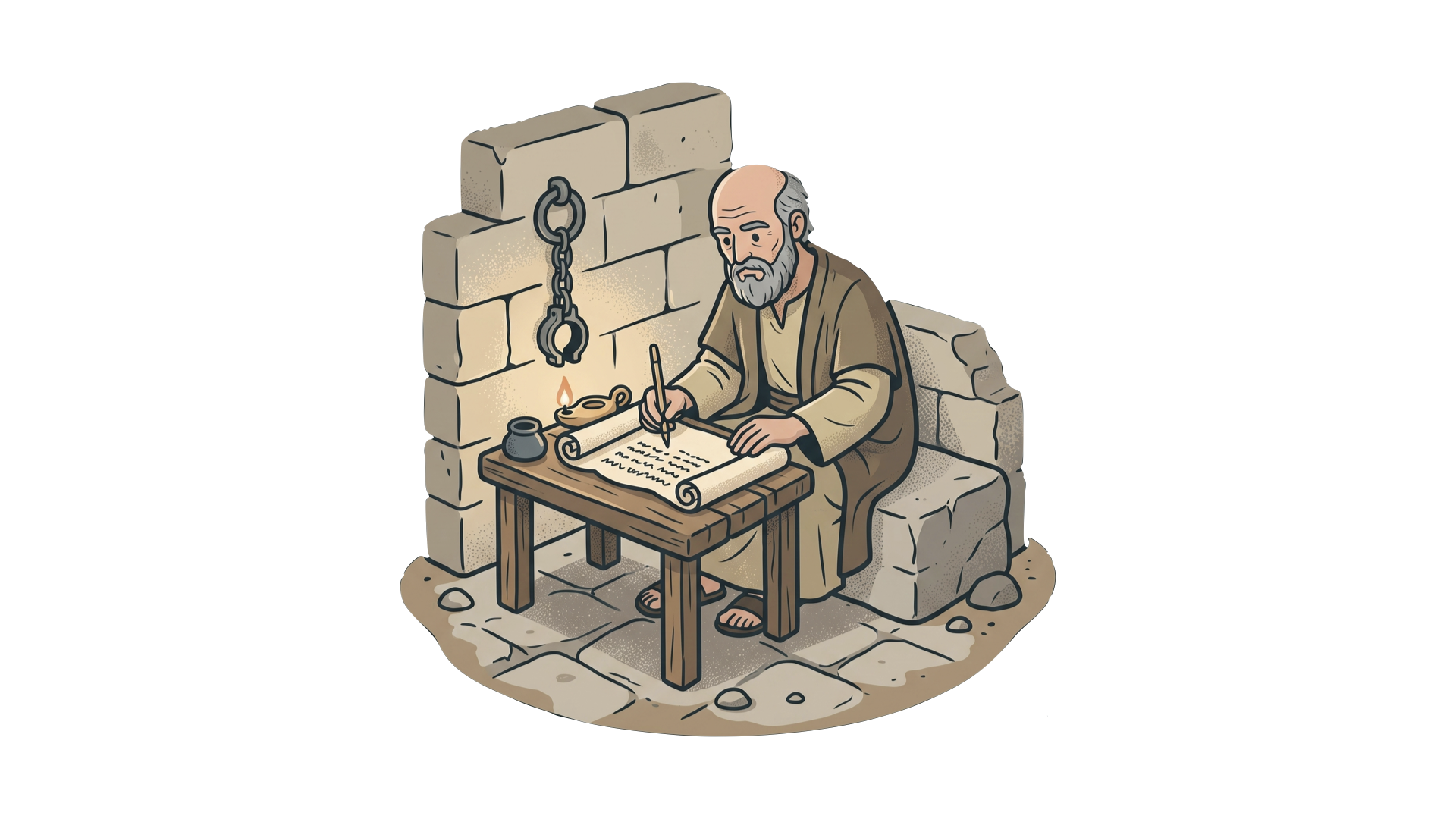
In our study tonight, we read the final chapter of Colossians. The passage begins with a final instruction for masters to treat their slaves fairly, continuing the theme of how our faith impacts relationships (4:1). Paul then urges the Colossians to devote themselves to prayer with thanksgiving, asking them to specifically pray for him that God would open a door for the Word so he could clearly proclaim the "mystery of Christ," which is the very reason he is imprisoned (4:2-4). Following this, he encourages them to act wisely and speak graciously, with words "seasoned with salt," toward non-believers (4:5-6). As several members noted, the rest of the chapter feels very warm and personal. Paul sends Tychicus and Onesimus to them to share details about his circumstances and to encourage their hearts (4:7-9). He then lists greetings from many of his co-laborers—Aristarchus, Mark, Justus, Epaphras, Luke, and Demas—highlighting their faithfulness and service to the gospel (4:10-14). As one club member pointed out, Paul specifically mentions that some of these men are "of the circumcision," tying back to his earlier teaching in chapter two and showing the unity of Jew and Gentile in Christ. The chapter concludes with instructions to share the letter with the church in Laodicea, a specific word of encouragement for a man named Archippus to fulfill his ministry, and a final, poignant sign-off in his own handwriting: "Remember my chains. Grace be with you" (4:15-18).
2. What is God revealing about humanity?
Our discussion revealed a lot about human nature. We observed that people have a tendency to drift from what is truly important and lose sight of the gospel. This was evident in Paul's specific encouragement to Archippus to "take heed to the ministry... that you may fulfill it" (4:17). As one person suggested, this implies Archippus might have been struggling, showing how easily we can lose our way. Because of this tendency to drift, we need constant encouragement, prayers, and reminders from one another to stay bold in our faith. We also noted that our natural inclination is often to speak with bitterness instead of grace, which is why Paul's command to have our words "seasoned with salt" (4:6) is so necessary. Another member pointed out that while we are prone to show favoritism, God is no respecter of persons; Paul's list of greetings included Jews, Gentiles, prisoners, and free men, all united and useful for His cause.
3. What is God revealing about Himself?
In our study tonight, we saw that God is the sovereign Master who is in control of all things. One member highlighted a key truth from verse 3: it is God who "will open up to us a door for the word." We often think we have to create our own opportunities to share our faith, but this passage reminds us that we should pray and rely on God, who is the one to open those doors. Paul, writing from a prison cell, was still confident that God was making a way for the "mystery of Christ" to be proclaimed, a testament to God's power over any circumstance. Furthermore, we saw that the all-sufficient Christ is that hidden mystery. It is God's will for His believers to "stand complete and fully assured in all the will of God" (4:12), a prayer that Epaphras was praying for the Colossians. God is the one who gives us this assurance and completeness as we seek Him.
4. How should our lives change?
This passage left us with several practical applications for our own lives. First, as one member shared, we must be more conscious of our prayer life. Paul’s instruction to "devote yourselves to prayer, being watchful in it" (4:2) is a direct call to fight against the many distractions that pull us away from communion with God. Another member pointed out the importance of community; Paul listed numerous individuals he had deep, personal relationships with, showing how interconnectedness provides support and strength. Like a forest of trees whose roots are intertwined, believers who share their lives, pray for one another, and offer encouragement are much harder to knock over. We must walk the walk, setting an example for others, and share our circumstances—our struggles and our victories—to encourage each other. Finally, as someone noted, if we are to be the "flavor of God" to the world, our words must be full of grace, compassion, and encouragement (4:6), reflecting the transformative power of the "mystery of Christ" in our own hearts.