Nothing Will Be Impossible with God (Luke 1:1-38)
Luke 1:1-38
This is a recap of our Bible Caller Club meeting on June 30th, 2026 over this passage. If you want to join the club and attend future meetings and study with us via phone, click here.
Context:
In our study on the evening of June 30, 2026, we began our look into the Gospel of Luke. Our group learned that Luke, a physician, wrote this book as an orderly, historical account to a man named Theophilus (which means "lover of God") to provide certainty about the things he had been taught about Jesus. This specific passage starts that orderly account by detailing the miraculous announcements of the births of both John the Baptist and Jesus, rooting God's plan in the lives of real people. He focuses on the humanity of Jesus as the Son of Man.
1. What’s happening in this passage?
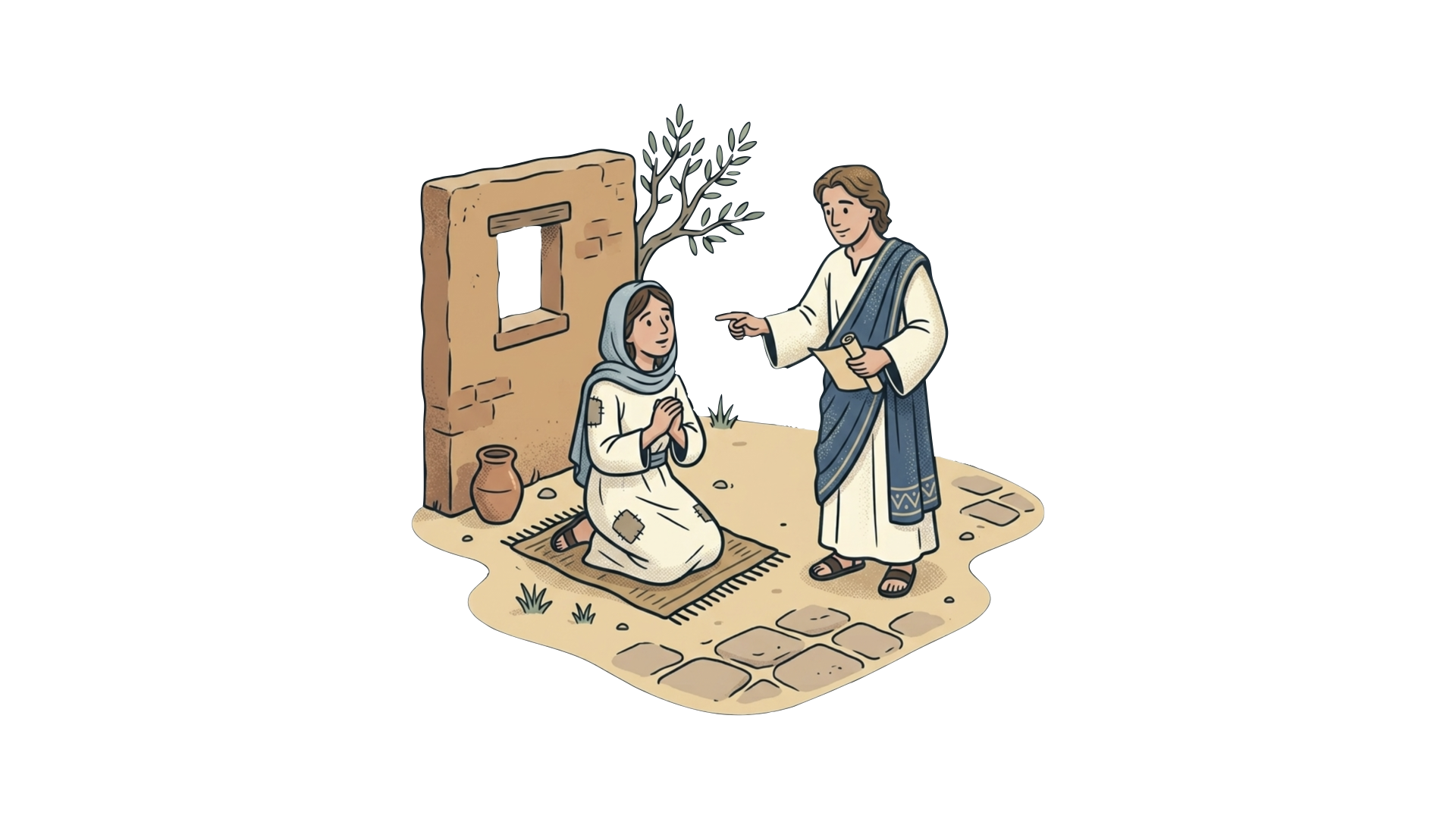
Tonight, our group read through the first part of Luke, chapter one. The passage began with the author, Luke, explaining his purpose for writing: he has carefully investigated everything from the beginning to write an orderly account so that his reader, Theophilus, can know the certainty of the things he's been taught (verses 1-4). The story then shifts to a priest named Zechariah and his wife Elizabeth, who were righteous but old and without children. While serving in the temple, the angel Gabriel appeared to Zechariah, telling him that Elizabeth would have a son named John, who would prepare the way for the Lord (verses 5-17). As one club member pointed out, Zechariah doubted this news because of his and his wife's old age, and as a sign, he was made unable to speak until the child was born (verses 18-22). Six months later, the same angel, Gabriel, was sent to a young virgin named Mary in Nazareth. Gabriel told her she had found favor with God and would conceive and bear a son named Jesus, who would be called the Son of the Most High and whose kingdom would have no end (verses 26-33). Mary questioned how this could happen since she was a virgin, but unlike Zechariah's doubt, her question was one seeking understanding. Gabriel explained that the Holy Spirit would make it happen, and as proof, he mentioned that her relative Elizabeth was already pregnant in her old age, "For nothing will be impossible with God" (verses 34-37). The passage ends with Mary's faithful response: "Behold, the slave of the Lord. May it be done to me according to your word" (verse 38).
2. What is God revealing about humanity?
In our study tonight, we saw that when God's plans intersect with our lives, our human response is often fear and doubt. As one person shared, both Zechariah and Mary asked questions, showing our natural human need for proof or understanding. We need reassurance, and that's precisely why Luke states his goal is to provide certainty (verse 4). We also noticed how unlikely all the people in this story were. Mary, a virgin, and Zechariah doubted God's promise, even after he had been praying for it. As another member highlighted, we sometimes pray like Zechariah, not fully believing God will answer. God chose a couple who were too old and a girl who was very young—people at opposite extremes who wouldn't normally be expected to be part of such a grand plan. This reveals that we desire structure and certainty, but we are also prone to weakness and doubt.
3. What is God revealing about Himself?
Our discussion brought out that God is sovereignly and patiently fulfilling His long-promised plan. A great point was made that God hears and answers our prayers, but often not on the timeline or in the way we expect. Zechariah and Elizabeth had been praying for a child for years, and God answered in their old age, far beyond when they thought it was possible. We also saw that God seeks out and empowers flawed people to accomplish His purpose. He wasn't looking for perfect people; He was looking for people He could use. The most powerful truth revealed about God in this passage, which the angel Gabriel stated directly, is that "nothing will be impossible with God" (verse 37). He overcomes impossible obstacles—barrenness, old age, and virginity—to show that His plan will not be stopped by human limitations.
4. How should our lives change?
After studying this passage, our group felt we should trust more deeply in God's structured plan, even when it doesn't make sense to us. One person noted that we should pray with the kind of faith that truly believes God will respond, unlike Zechariah's initial doubt. We should have confidence that, while it might not be in our timeframe, God will provide an answer. Another member shared that this passage encourages us to change our negative attitudes about ourselves. We shouldn't see ourselves as too old, too young, or not talented enough to be used by God. God can use anyone, at any age, in any circumstance. The key takeaway, as one of the youngest members put it, is to "believe in Jesus and no one else." We should welcome His kingdom into our lives with the same faith Mary had, trusting that God can do the impossible in and through us.