He Who Is Forgiven Much Loves Much (Luke 7:44-50)
Luke 7:44-50
This is a recap of our Bible Caller Club meeting on July 11th, 2026 over this passage. If you want to join the club and attend future meetings and study with us via phone, click here.
Context:
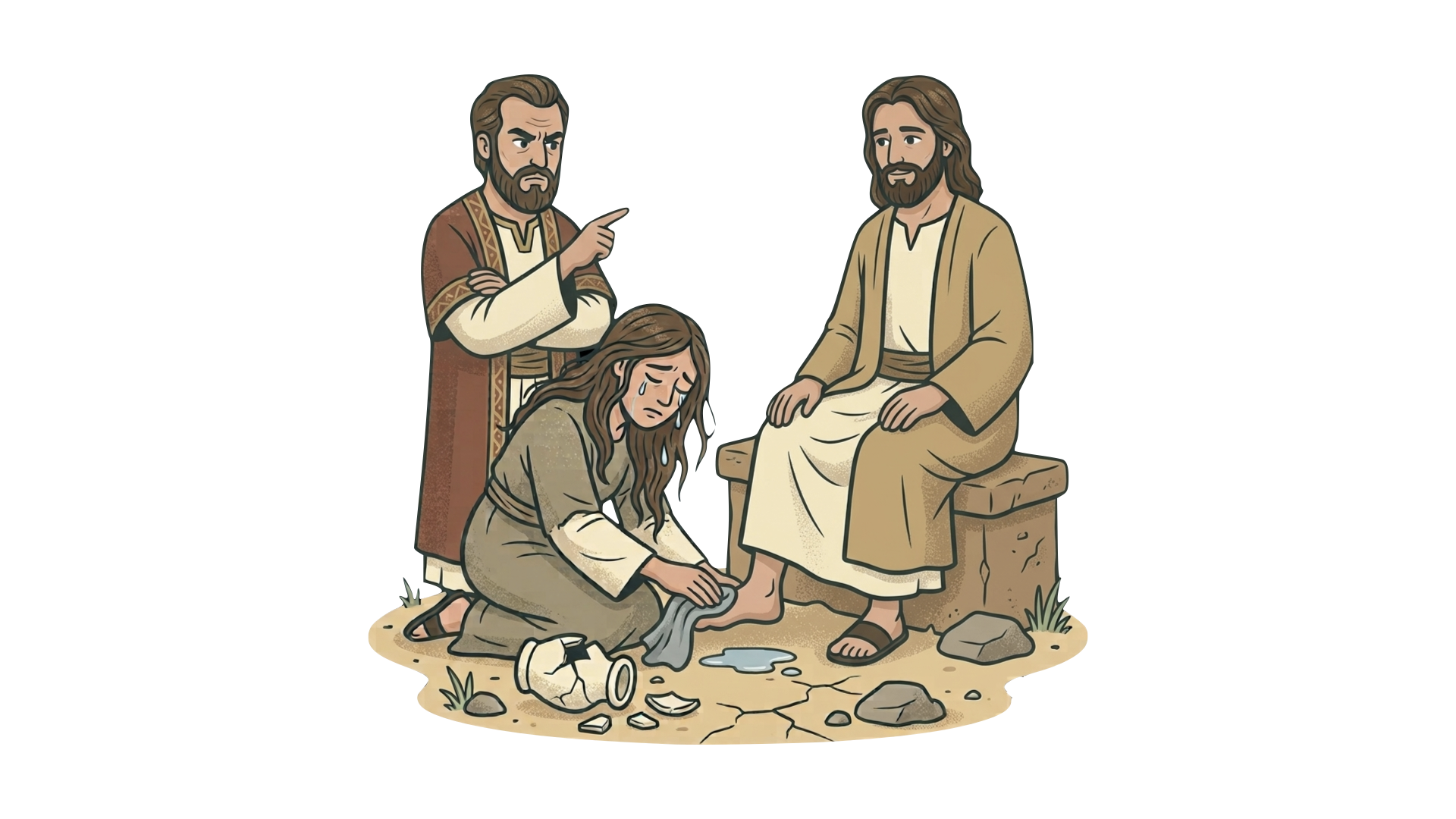
In our Bible study on July 11, 2026, we discussed the conclusion of a story where Jesus is dining at the house of a Pharisee named Simon. The passage contrasts the actions of Simon, who offered Jesus none of the customary hospitalities, with those of a sinful woman who crashed the dinner to anoint Jesus' feet with her tears and expensive perfume, an act of extravagant love and humility.
What is happening in this passage?
In the section of Luke we read tonight, Jesus is in the home of Simon, a Pharisee. Jesus points out to Simon the stark contrast between his behavior and that of a woman who had entered uninvited (Luke 7:44-46). Simon, the host, failed to provide even the basic courtesies of washing Jesus' feet, offering a welcoming kiss, or anointing his head with oil. In direct opposition, the woman, who was known to be a sinner, wept on Jesus' feet, wiped them with her hair, kissed them repeatedly, and anointed them with costly perfume. As one member explained, the Pharisee invited Jesus into his home but not into his heart, while the woman, though an outcast, came seeking Jesus and gave her life to Him. Jesus then declares that the woman's many sins are forgiven because she has shown great love, stating that someone who is forgiven little, loves little (Luke 7:47). This declaration causes the other guests to question who Jesus is that He can forgive sins, and Jesus concludes by telling the woman, "Your faith has saved you. Go in peace" (Luke 7:48-50).
What is God revealing about humanity in this passage?
Our study group highlighted several things this passage reveals about our human tendencies. We often put sin into a hierarchy, judging others' sins as worse than our own, just as Simon did. As one person pointed out, we see the speck in someone else's eye while ignoring the plank in our own. Another key observation was our concern with appearances. The Pharisee was focused on the outward show of hosting Jesus to seem important, but he was unwilling to stoop down and perform a humble act of service. As a club member aptly put it, we have a tendency to "desire the appearance of righteousness without the substance." We might want to look like a good Christian, but we fail when it comes to the daily, nitty-gritty service. However, the passage also shows a beautiful side of humanity: those who truly recognize the depth of their own sin can respond to grace with extravagant love and humble service, just like the woman. We are all in the same boat as this woman, and recognizing that we have been forgiven much is the source of true thankfulness.
What is God revealing about himself in this passage?
In our discussion, we noted that God reveals His deep compassion and desire for a real relationship with us. He is not interested in an outward appearance of love; He wants our hearts. A member shared that this passage shows God's humility; Jesus is not disgusted or repulsed when this sinful woman comes to Him in her broken state. Instead, He welcomes her compassionately and defends her actions. We see that God looks at the heart, not the outward appearance (Luke 7:44). To the world, the Pharisee looked righteous and the woman looked like the "scum of the earth," but Jesus saw the truth: the woman's heart was humble and repentant, while the Pharisee's was proud and judgmental. God graciously forgives our great debt when we approach him with humble faith. We must all ask the question the dinner guests were asking: "Who is this man?" (Luke 7:49). The answer is that He is the one who has the authority to forgive all our sins and desires for us to live in His peace.
How should our lives change having studied this passage?
Our study concluded with some powerful applications for our own lives. First, we must stop judging others and instead focus on the immense debt of sin that God has forgiven us. As Jesus asked, "Who will love him more?" (Luke 7:42). By counting our own debt, we can better appreciate the grace we've been shown and love much in response. Secondly, we are called to put our faith into action. It's not enough to invite Jesus into our lives for show; we must serve Him with sacrificial humility. The woman broke a very valuable alabaster jar to anoint Jesus. This represents breaking our own pride, our ego, and our self-made kingdoms before God. We need to be willing to bring our broken selves to Jesus and let Him heal us and tell us to "Go in peace" (Luke 7:50). Ultimately, we should live out our faith not for appearances, but with a heart full of love because we have been forgiven much.