We Must Not Take Offense at Jesus (Luke 7:1-35)
Luke 7:1-35
This is a recap of our Bible Caller Club meeting on July 10th, 2026 over this passage. If you want to join the club and attend future meetings and study with us via phone, click here.
Context:
In our Bible Collar Club meeting on July 10, 2026, we continued our study of Luke's Gospel. The overall context for the book is to know with certainty the things taught about Jesus and His mission to proclaim the good news of the kingdom of God to the poor, oppressed, and searching. This specific passage flows from the end of chapter six, which states that a person's words and actions come from what is in their heart, setting the stage to see how different people respond to Jesus from the abundance of their hearts.
What is happening in this passage?
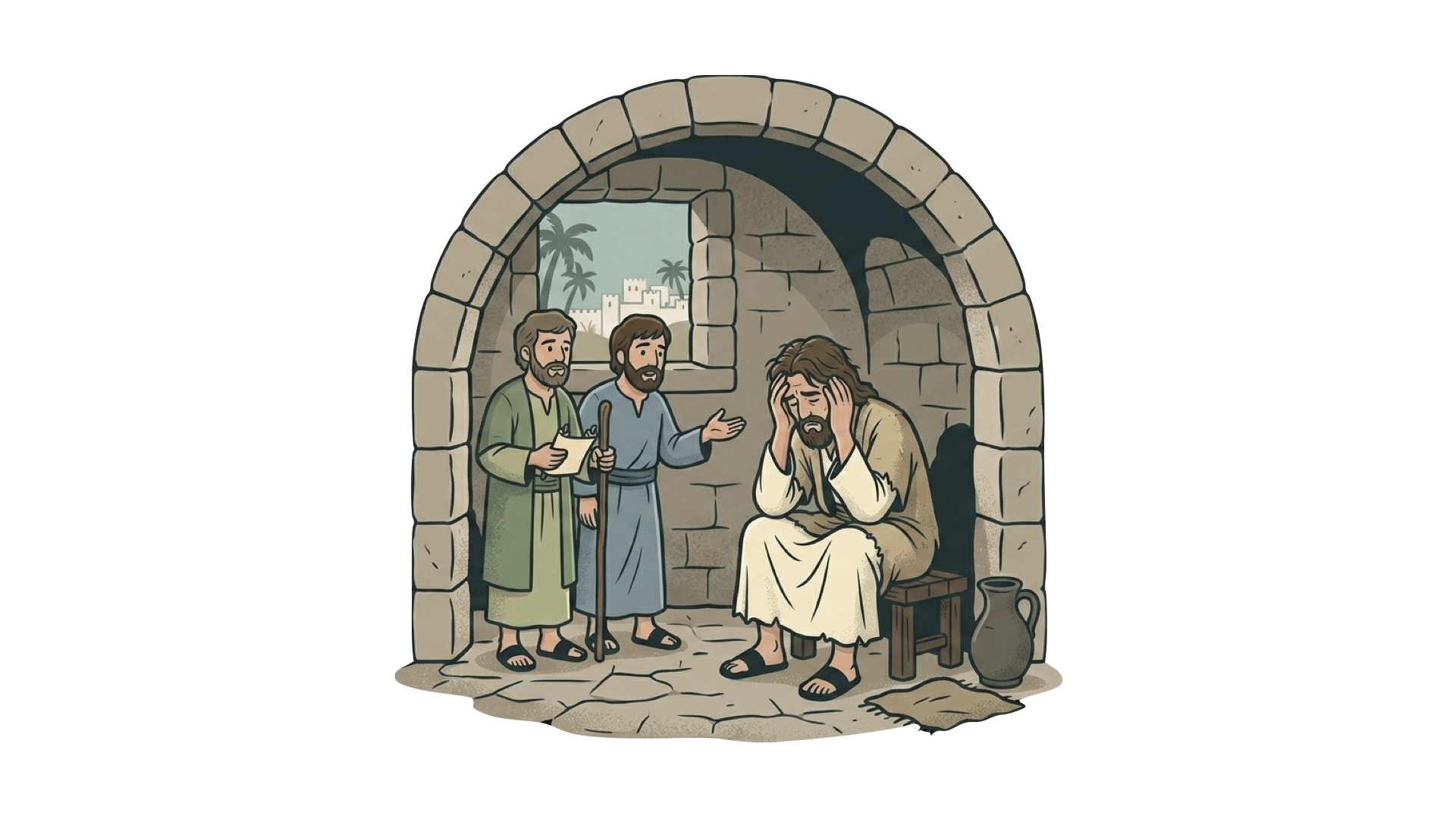
In our study tonight, we read through the first part of Luke chapter seven, which contains three main encounters. First, a Roman centurion, a man of authority, sends Jewish elders to Jesus, humbly asking Him to heal his highly valued slave who is near death (vv. 1-5). Before Jesus even arrives, the centurion sends friends to say he is not worthy for Jesus to enter his home, but he has faith that Jesus can heal with just a word, recognizing His supreme authority. Jesus marvels at this great faith and heals the slave from a distance (vv. 6-10). Next, Jesus and a large crowd encounter a funeral procession for a widow's only son. Moved by deep compassion for her grief, Jesus tells her not to cry, touches the coffin, and raises the young man from the dead, causing fear and praise to spread as people declare that God has visited His people (vv. 11-17). Finally, the disciples of John the Baptist, who is now in prison, come to Jesus asking if He is the promised one. Jesus responds by telling them to report the miracles they have witnessed—the blind seeing, the lame walking, the dead being raised—and blesses those who are not offended by Him (vv. 18-23). Jesus then praises John as the greatest of all prophets but also points out that the least in the kingdom of God is greater, highlighting a contrast between John's humble service and the rejection of God's purpose by the self-righteous Pharisees and teachers of the law (vv. 24-35).
What is God revealing about humanity in this passage?
Our discussion highlighted some key truths about humanity. One member was humbled by the fact that even John the Baptist, who had baptized Jesus and proclaimed Him as the Messiah, experienced discouragement and doubt while in prison (v. 19). It was a powerful reminder for our group that it's human to feel discouraged when things don't go the way we expect, and we shouldn't get down on ourselves for it. We also see our tendency to feel unworthy, just as the centurion did when he said, "I did not even consider myself worthy to come to you" (v. 7). As one club member pointed out, we can get into a rut thinking we are "too far gone." The passage shows that our worthiness isn't the point; Jesus comes to us anyway. Finally, we learned that humans tend to reject God's unexpected methods and "take offense" at Him when His plan doesn't match our expectations, whether it's our timeline for answered prayer or the suffering we endure (v. 23). We often impose our will on Jesus instead of submitting to His, even when He is working for our ultimate good.
What is God revealing about himself in this passage?
In our study, we saw so much of Jesus's character on display. A key takeaway for one member was His incredible compassion. Jesus didn't just see events; He saw people. He had compassion on the centurion, the grieving widow, and even the doubting John the Baptist. As we observed, God in Christ has all authority, a fact the centurion recognized, yet He responds to humble faith and pleading. It was also pointed out that God can use our worst situations, like the death of the widow's son, to bring glory to Himself and transform the lives of others who witness His power (vv. 16-17). An interesting insight was that Jesus doesn't always perform miracles based on a person's faith alone. He looked at the widow's grief, and that was enough. He responds not just to our faith, but to our deepest emotions, showing He is a God who cares immensely for his creation and desires to bring comfort and purpose through our hardest trials. And as we saw in verse 30, God has a purpose for every single person, which He desires for us to accept.
How should our lives change having studied this passage?
Reflecting on this passage led to several practical applications for our lives. One member suggested that, like a good tree bearing good fruit, we should do good and show love to others, not based on their worthiness or whether they share our beliefs, but simply because of who we are in Christ. Another person shared that after seeing Jesus’s character, we should all strive to love God more, recognizing we can never "arrive at the max" in our love for Him. This connects to Jesus's words in verse 23: "Blessed is he who does not take offense at me." Instead of getting offended when His kingdom doesn't arrive as we expect, we need to count our blessings, look around at all the good He is still doing, and let our love for Him grow. We must humbly recognize His authority, have faith, and, as verse 30 implies, accept God’s purpose for us. Finally, just as John's disciples were told to "go and report what you have seen and heard" (v. 22), we too should go and report the good news, hope, and love we have found to the poor, sick, and lost in the world around us.