He Himself Is Our Peace (Ephesians 2)
Ephesians 2
This is a recap of our Bible Caller Club meeting on June 12th, 2026 over this passage. If you want to join the club and attend future meetings and study with us via phone, click here.
Context:
In our Bible study on June 12, 2026, we continued our journey through the book of Ephesians. The overall context for this letter is that Paul, writing from prison in Rome, is addressing the church in Ephesus, a city steeped in occult practices, which caused tension between Jewish and Gentile believers. In chapter one, Paul reminded them of the grace they have in Christ and prayed they would understand the power of Jesus who is head over the church; this passage flows directly from that by reminding them of what that grace saved them from and what it has united them for.
1. What’s happening in this passage?
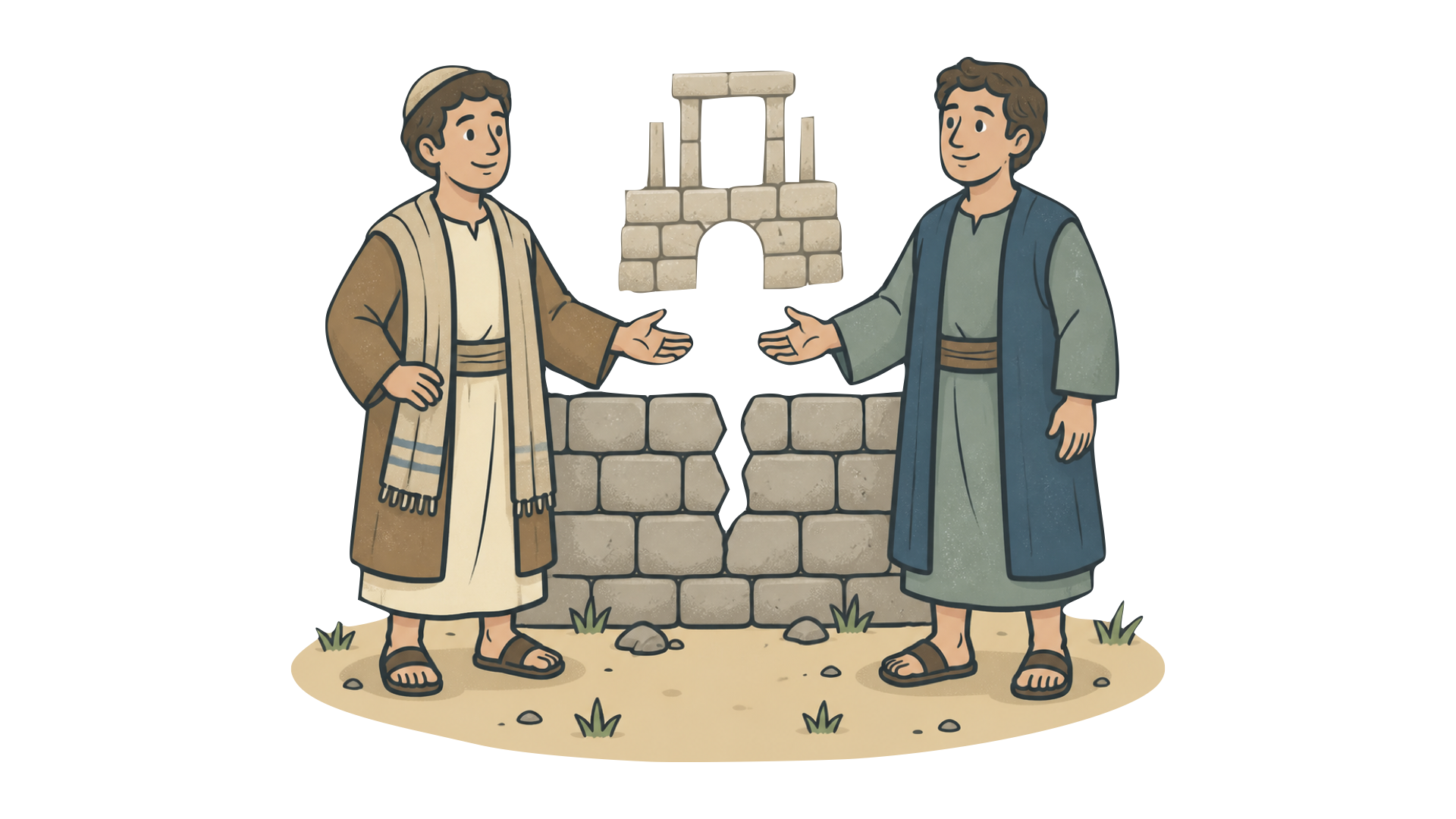
In tonight's study, we read through Ephesians chapter 2. The chapter starts by reminding the Ephesian believers of their former state: they were spiritually "dead in [their] transgressions and sins," following the ways of the world and "the ruler of the power of the air" (vv. 1-2). As one club member pointed out, this state naturally resulted in living according to the lusts of the flesh and being "children of wrath" (v. 3). But then comes a major shift in the passage. The text declares, "But God," and explains how, out of His rich mercy and great love, He made them alive with Christ, saving them by grace (vv. 4-5). This salvation is a gift, not based on works, so no one can boast (vv. 8-9). Instead, we are God's "workmanship, created in Christ Jesus for good works" (v. 10). Paul then pivots to remind the Gentiles specifically that they were once outsiders, "alienated from the citizenship of Israel and strangers to the covenants of promise," living without hope and without God (vv. 11-12). But now, through the blood of Christ, those who were far off have been brought near (v. 13). Christ himself is their peace, having broken down the "dividing wall" between Jew and Gentile to create "one new man," reconciling both groups to God in one body through the cross (vv. 14-16). Because of this, they are no longer strangers but are now "fellow citizens with the saints and are of God’s household," being built together on the foundation of the apostles and prophets with Christ as the cornerstone, growing into a holy temple where God dwells by His Spirit (vv. 19-22).
2. What is God revealing about humanity?
During our discussion, we noted several truths about humanity revealed in this chapter. Fundamentally, we saw that without God, we are spiritually dead and hopeless, naturally following the ways of the world and Satan (v. 2). Another member shared that without God, it is our nature to create groups and build "dividing walls" of hostility between people (v. 14). We simply cannot save ourselves; it is a gift of grace (vv. 5, 9). However, the passage also shows our purpose. We learned that we are God's "workmanship," specifically created in Christ for the purpose of doing good works (v. 10). Someone else added a beautiful insight that just as God is the Creator, we who are created anew are invited to be creators ourselves, participating in His work. We also saw that this new life isn't meant to be lived alone; without God, we are strangers and wanderers, but in Him, we become part of a family, "God's household" (v. 19). It's a continual process, as we are always "being built together" and never fully arrive at a point where our work is done (vv. 21-22).
3. What is God revealing about Himself?
This chapter reveals so much about God's character. The first thing we noted was that God is "rich in mercy" and motivated by a "great love," which He had for us even when we were dead in our sins (v. 4). A member pointed out the incredible truth that God doesn't just save us, but He raises us up and seats us "with Him in the heavenly places" (v. 6). This is a stark contrast to the pagan gods the Ephesians once served, who demanded servitude. Our God invites us to participate in His glory and authority. We also affirmed that it is the blood of Jesus that brings us near to God and to each other (v. 13). Jesus himself is our peace, the one who actively breaks down the walls that divide us (v. 14). He is the cornerstone of the church, the essential foundation upon which everything is built (v. 20). Finally, we saw that God is actively and continually at work, building his people together into a dwelling place for His Spirit (vv. 21-22).
4. How should our lives change?
As we concluded our study, we considered how this passage calls us to live differently. A member drew our attention back to verse 10, emphasizing that since God has prepared good works for us to do, we need to be actively looking for that path and recognize the opportunities He places before us. Another person highlighted verse 3, reminding us that we must keep our faith focused on Jesus, because it's easy to fall back into our former ways of living for ourselves. This means we must continually recognize that our salvation is by grace, not our own efforts, and we shouldn't boast in our works (v. 9). We must actively live in peace with other believers, intentionally breaking down walls and building bridges, just as Jesus did for us. One member shared a wonderful, practical application of this: being willing to engage with people from different Christian traditions, even using their version of the Bible, to break down preconceived walls and find common ground. Ultimately, we must build our lives on the foundation of Scripture with Christ as our cornerstone and participate in God's work of "building up the temple" by loving and serving one another.