My Soul Magnifies the Lord (Luke 1:39-80)
Luke 1:39-80
This is a recap of our Bible Caller Club meeting on July 2nd, 2026 over this passage. If you want to join the club and attend future meetings and study with us via phone, click here.
Context:
In our study on the night of July 2nd, we covered the second half of Luke chapter one. The overall context, as the group leader reminded us, is that Luke is writing a historical, orderly account of Jesus's life to a Greco-Roman audience so they can "know with certainty" about the things they've been taught, with a special focus on Jesus's humanity. This specific passage flows from the first half of the chapter, where the impossible births of John and Jesus were foretold to an elderly woman and a young virgin, establishing the theme that "nothing will be impossible with God" as He works through real, humble people.
1. What’s happening in this passage?
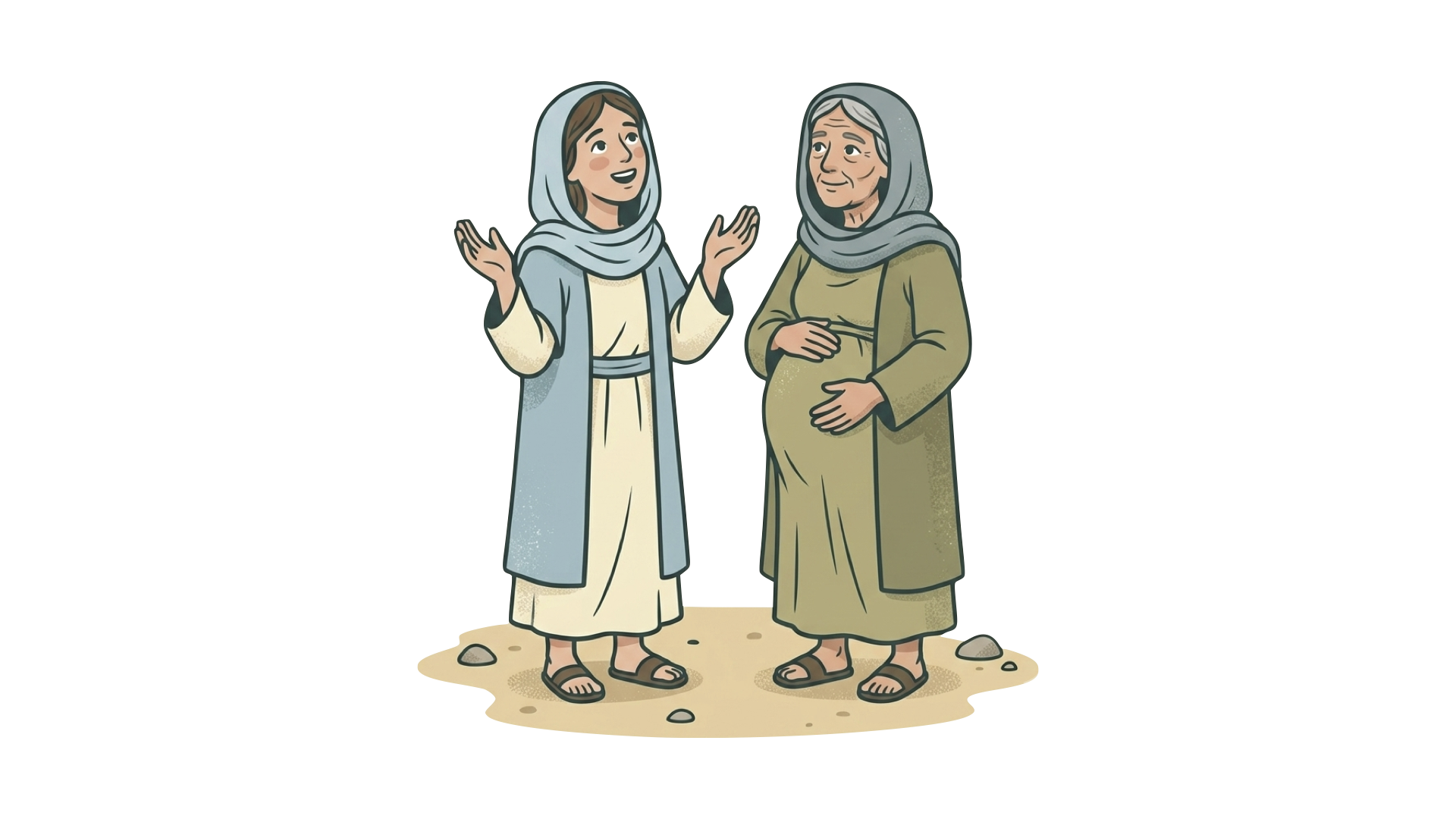
In our Bible study, we read through the last part of Luke chapter one, picking up where Mary travels to visit her relative, Elizabeth (vv. 39-40). As soon as Mary greets her, the baby (John the Baptist) leaps in Elizabeth’s womb, and Elizabeth, filled with the Holy Spirit, blesses both Mary and the baby she is carrying (vv. 41-45). In response, Mary sings a beautiful song of praise, often called the Magnificat, where she glorifies God for choosing a humble servant like her and for how He lifts up the lowly while bringing down the proud (vv. 46-55). Mary then stays with Elizabeth for about three months before returning home (v. 56). The passage then shifts to the birth of John the Baptist. His parents, Elizabeth and Zechariah, insist on naming him John, which surprises their relatives. As soon as Zechariah writes "His name is John" on a tablet, his ability to speak is restored, and he praises God (vv. 57-66). Finally, Zechariah, also filled with the Holy Spirit, delivers a prophecy about his son John preparing the way for the Lord and about the salvation and mercy God is bringing to His people, fulfilling the ancient promises made to Abraham (vv. 67-80). As several members noted, the Holy Spirit is a key actor in this entire narrative, empowering each person—Elizabeth, Mary, the unborn baby John, and Zechariah—to recognize and proclaim God's work.
2. What is God revealing about humanity?
Our discussion highlighted several truths about humanity revealed in this passage. A major point that came up was how humanity is often divided between the humble who fear and trust God, and the proud who will be thwarted. Mary’s prayer makes this distinction clear, and we see it in action through the people God chose. We also discussed how people tend to question God's path, like Zechariah did earlier in the chapter, contrasting with Mary's trusting heart. One person pointed out that Mary could have had a "woe is me" attitude about her difficult situation, but instead, she chose to rejoice. This led to a conversation about how our attitude is a choice and that as Christians, we get to have a better attitude. Another member shared a powerful thought: "We're all filled with something: the world, slash self or God and the Holy Spirit." Our souls are always magnifying something, and this passage shows us powerful examples of what it looks like to magnify the Lord. Finally, we observed the theme of waiting; Mary stayed for three months, and John had to grow in spirit. It's a reminder for us that we often go through a growth process and must wait for God's promises to come to fruition.
3. What is God revealing about Himself?
During our study, it became clear that God reveals Himself as a promise-keeper. Zechariah's prophecy focuses heavily on how God is fulfilling the covenant He made with Abraham centuries earlier. As one club member put it, God wants us to pray and trust that He will answer. He is a trustworthy God. We also talked about how God chooses the unlikely. He didn't select high-ranking or powerful people for this pivotal moment in history. Instead, as someone noted, "He picked some really old people and then a teenage girl." God actively lifts up the humble and those who fear Him, while scattering the proud. It's a picture of what a member called Jesus's "upside-down kingdom," where the last will be first. God is looking for people who will be faithful with what they are given so He can work His divine plan through their lives.
4. How should our lives change?
As we concluded our study, we talked about how this passage should impact our daily lives. The most prominent takeaway was from Mary's prayer: we need to check what our souls are magnifying each day (v. 46). Are we, like Mary, magnifying the Lord, or are we magnifying ourselves and our problems? This means we must actively humble ourselves and accept the things God entrusts us with, even if they seem scary or difficult. We also need to trust in the growth process. Just as there was a waiting period between the promise and its fulfillment for Zechariah and Elizabeth, we too must be patient, trust that God is faithful, and, as one person said, "pray without ceasing." We shouldn't give up when things take time. Instead, we should patiently wait, allowing God's light to "direct our feet into the way of peace," trusting that He who made the promise will fulfill it.