To Live is Christ and to Die is Gain (Philippians 1)
Philippians 1
This is a recap of our Bible Caller Club meeting on June 20th, 2026 over this passage. If you want to join the club and attend future meetings and study with us via phone, click here.
Context:
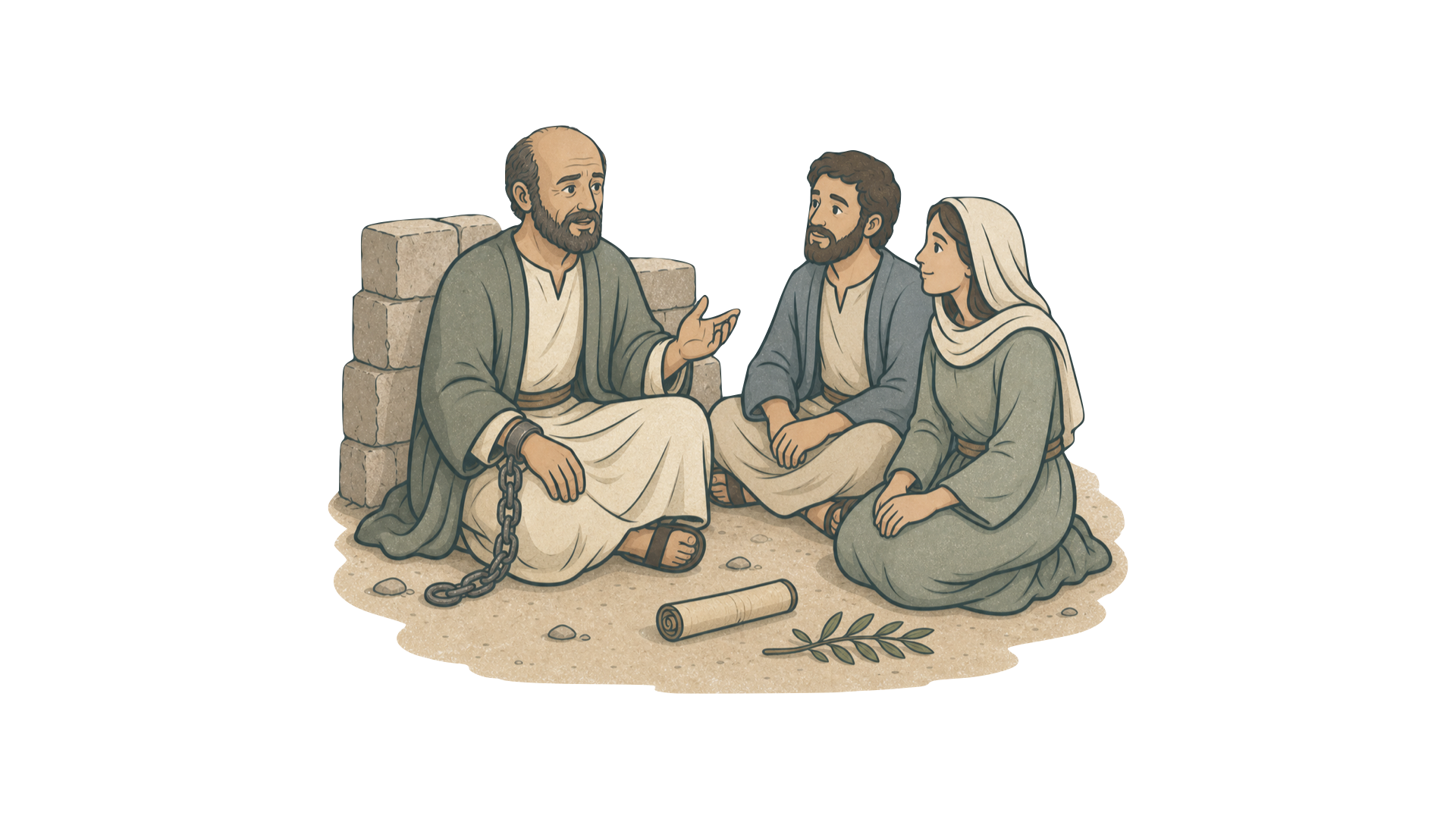
Our Bible study group started a new book on the evening of June 20, 2026: the book of Philippians. While many think Philippians is simply about joy, the Apostle Paul is actually writing from prison to address selfish teachers and division within the Philippian church, presenting joy as the solution to their conflict. This first chapter flows from that context, with Paul greeting the church, praying for them, and then immediately addressing a core issue: their negative perception of his imprisonment.
1. What’s happening in this passage?
In our study tonight, we explored the first chapter of Philippians. The chapter begins with a greeting from Paul and Timothy to the church in Philippi, including their leaders (v. 1-2). Paul then expresses his thankfulness and joy for their partnership in the gospel, confidently stating that God will complete the good work He began in them (v. 3-6). He prays for them, and one member pointed out how important it is to pay attention to prayers in the Bible. Paul's prayer is that their love would grow in knowledge and discernment so they could "approve the things that are excellent" and be blameless until Christ's return (v. 9-11).
The discussion highlighted that Paul then immediately addresses what he wants them to know and approve of: that his imprisonment has actually advanced the gospel (v. 12). His chains have become known throughout the Praetorian Guard, and his situation has emboldened other believers to preach Christ without fear (v. 13-14). As the group discussed, Paul acknowledges that some were preaching from impure motives like envy and selfish ambition, hoping to cause him more distress, while others preached from love. Yet, Paul’s response is one of joy, simply because Christ is being proclaimed (v. 15-18). He concludes the chapter by wrestling with his desire to depart and be with Christ, which is "very much better," versus remaining to help the Philippians grow in their faith. He urges them to live lives worthy of the gospel, standing firm together in one spirit and not being frightened by their opponents, seeing suffering for Christ's sake as a gift from God (v. 21-30).
2. What is God revealing about humanity?
Our group discussion uncovered several truths about human nature in this chapter. One member pointed out that humanity naturally has a bad attitude toward suffering; we see it as a punishment or a sign that we've done something wrong (v. 21-23). It was shared how often we think, "I must have really upset God," when bad things happen. Paul’s perspective is the complete opposite, viewing his suffering as a gain for the gospel. We also tend to judge others based on their hardships. The Philippians, living in a culture that valued status, looked down on Paul for being in prison. This revealed our human tendency to lack abounding love and jump to conclusions instead of supporting one another (v. 9). Another person noted that we are often driven by one of two things: selfish ambition and envy, or love for others (v. 15-17). Without God, we are prone to division and pride, which is why Paul had to urge them to stand firm in "one spirit, with one mind" (v. 27).
3. What is God revealing about Himself?
Through our study, we saw that God's character shines brightly in this passage. A key takeaway was that God can take any circumstance, even the most difficult and painful ones like imprisonment, and use it for the greater progress of the gospel. As one person said, "God can take any and every circumstance even the bad ones and use it." This is affirmed in Paul's confidence that the God who "began a good work in you will perfect it until the day of Christ Jesus" (v. 6). God is powerful enough to turn suffering into victory. The group also discussed that God desires unity for his people and wants us to stand firm, not being afraid of opposition or hardship (v. 27-28). He doesn't want us to be discouraged because He is in control. Finally, God wants our "boasting" to be in Him and not in ourselves or our worldly status (v. 26). In a culture obsessed with honor and power, this call to boast in weakness so that Christ is glorified reveals a God whose values are completely countercultural.
4. How should our lives change?
Tonight's study left us with several clear applications for our own lives. The first, as one member passionately shared, is that our love "needs to abound more and more" (v. 9). If we truly focus on growing in love for God and for others, other things like pride will fall away, and we will naturally live in a manner worthy of the gospel. This means we must learn not to judge people by the suffering they are going through, but to support them. We were also challenged to live more boldly, adopting Paul's "to live is Christ and to die is gain" mindset (v. 21). We should live with the confidence that no matter what happens, God has it under control, and the ultimate end is good. As our discussion leader quoted, "In the end everything will be okay. And if it's not okay, that means it's not the end."
Finally, we must change our mindset to "approve of what is truly excellent" (v. 10). In the context of this chapter, that means valuing selfless unity and even seeing suffering for Christ as a good thing because it allows His glory to be seen. As another member movingly pointed out from Paul's example, we should be willing to endure hardship for the benefit of others, choosing to "stick around and put up with some really, really hard things" if we know it will encourage someone else in their faith.