Knowledge Puffs Up, but Love Builds Up (1 Corinthians 8)
1 Corinthians 8
This is a recap of our Bible Caller Club meeting on May 8th, 2026 over this passage. If you want to join the club and attend future meetings and study with us via phone, click here.
On the evening of May 8th, 2026, our Bible Caller Club gathered to explore the eighth chapter of 1 Corinthians. We began by remembering the overarching theme of Paul's letter: teaching the Corinthian church how to view every aspect of their lives through the lens of the gospel—a message of sacrifice, service, and submission. Having already discussed division and sexual immorality, we turned our focus to a new issue causing friction in the Corinthian church: eating meat that had been sacrificed to idols.
1. What’s happening in this passage?
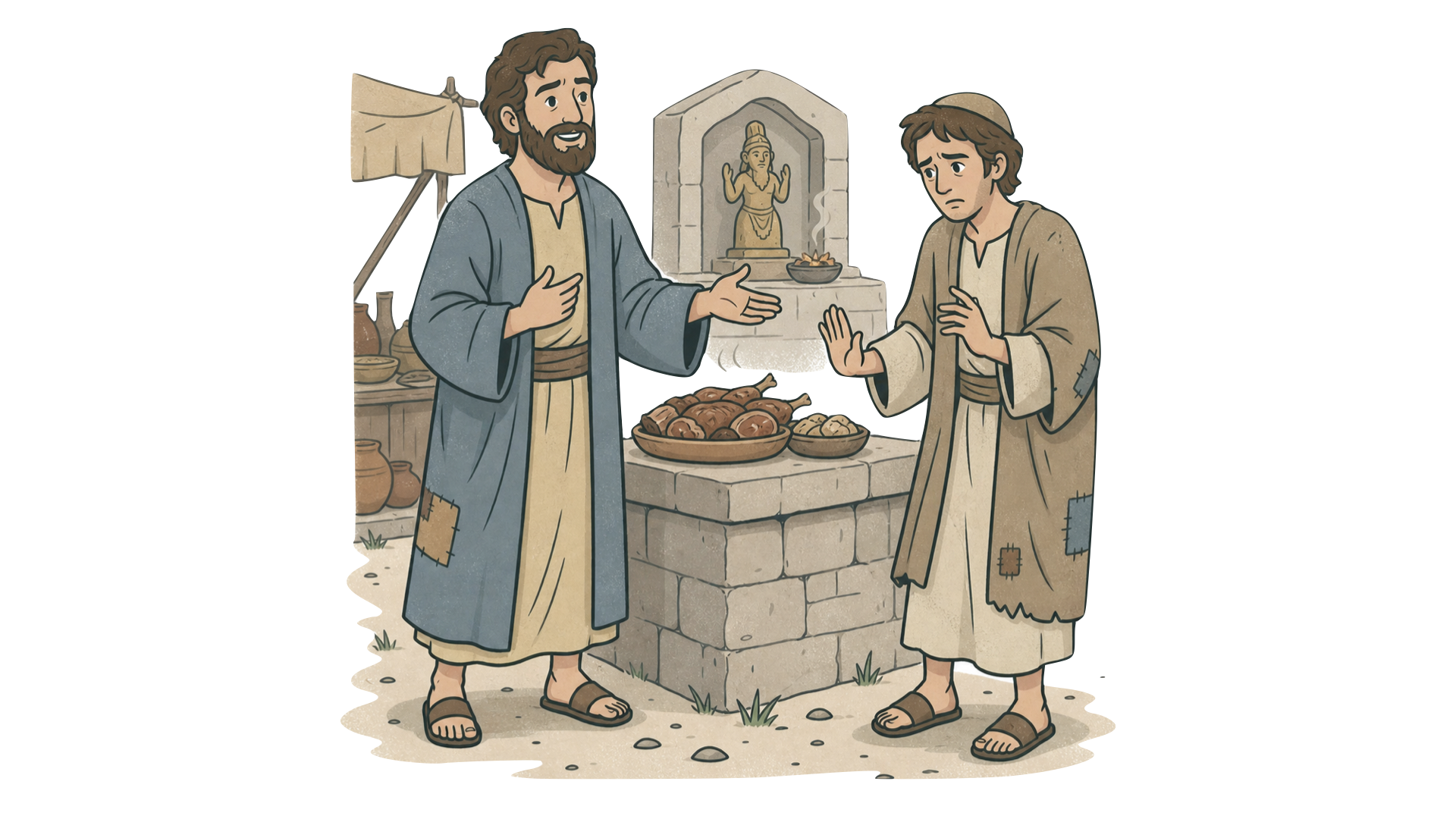
In 1 Corinthians 8, Paul addresses a conflict between two groups within the church: the "knowledgeable" believers and the "weaker" believers. The knowledgeable group understands that idols are nothing and there is only one true God. Therefore, they know that eating meat offered to these idols has no real spiritual consequence for them (8:4-6, 8). They have freedom in this area. However, there is another group, the "weaker" brothers, whose faith is not as mature. Having recently come out of idol worship, their consciences are sensitive. When they see a knowledgeable Christian eating this meat, it might confuse them or even tempt them to participate in a way that violates their own conscience, thereby causing them to stumble in their faith (8:7, 9-11). Paul's core message is a call to the knowledgeable to prioritize love over their liberty. He argues that exercising their freedom could ruin a weaker brother for whom Christ died (8:11). The chapter concludes with Paul's powerful personal resolution: if eating meat causes a brother to stumble, he will never eat meat again, demonstrating that love for a fellow believer should outweigh personal freedom (8:13).
2. What is God revealing about humanity?
This passage reveals a few key truths about our human nature. First, knowledge on its own has a tendency to make us arrogant or "puffed up" (8:1). It can lead to a sense of superiority and a disregard for those who don't share our level of understanding. In contrast, love is what truly "builds up" others and the church community. We also see that people exist at different stages of spiritual growth and understanding. Some are strong in their faith and knowledge, while others are "weaker" and more easily led astray. This diversity can become a source of division if not handled with love. The passage also highlights our inherent purpose: we were created for God and exist for Him (8:6). This purpose is the reason every part of our lives, including our freedoms, should be filtered through the gospel. Finally, it shows our capacity to wound one another, and in doing so, to sin directly against Christ himself (8:12).
3. What is God revealing about Himself?
Through Paul's words, we see a beautiful portrait of God's character. Most prominently, we learn that God values love far more than knowledge or the flaunting of personal freedom. He desires "mercy rather than sacrifice." We see the incredible depth of His compassion and patience in that Christ died even for those with "weak faith" (8:11). He doesn't just tolerate the immature; He made the ultimate sacrifice for them. This reveals that God's heart is for every single person, regardless of their level of spiritual maturity. Furthermore, when we cause a weaker brother to stumble, we are "sinning against Christ" (8:12). This shows how deeply God identifies with His people; to wound a member of His body is to wound Him directly, underscoring the seriousness of causing division or harm within the church. He is the "one God, the Father," the source of all things, and He is a God who wants us to grow by His patient love, not by rigid rules that ignore the condition of our hearts.
4. How should our lives change?
After studying this chapter, our lives should change in several practical ways. First, we must actively "choose love over liberty." This means being willing to limit our own freedoms for the benefit of helping another person grow in their faith. We should be more attentive to the people around us, building relationships so that we know their struggles and sensitivities. We can't know if we are a stumbling block if we don't know the people we might be affecting. This passage calls us to be less judgmental about disputable matters (like holidays or dietary choices) and more gracious, compassionate, and patient with others, just as Christ is with us. As one member shared, we should thank God for the patience He showed us when we were weaker in faith and then extend that same patience to others. Ultimately, we are to live out the gospel by prioritizing the spiritual well-being of our brothers and sisters above our own rights, remembering that Christ died for them, and we are called to love them as He did.