Running With Aim (1 Corinthians 9)
1 Corinthians 9
This is a recap of our Bible Caller Club meeting on May 9th, 2026 over this passage. If you want to join the club and attend future meetings and study with us via phone, click here.
1. What’s happening in this passage?
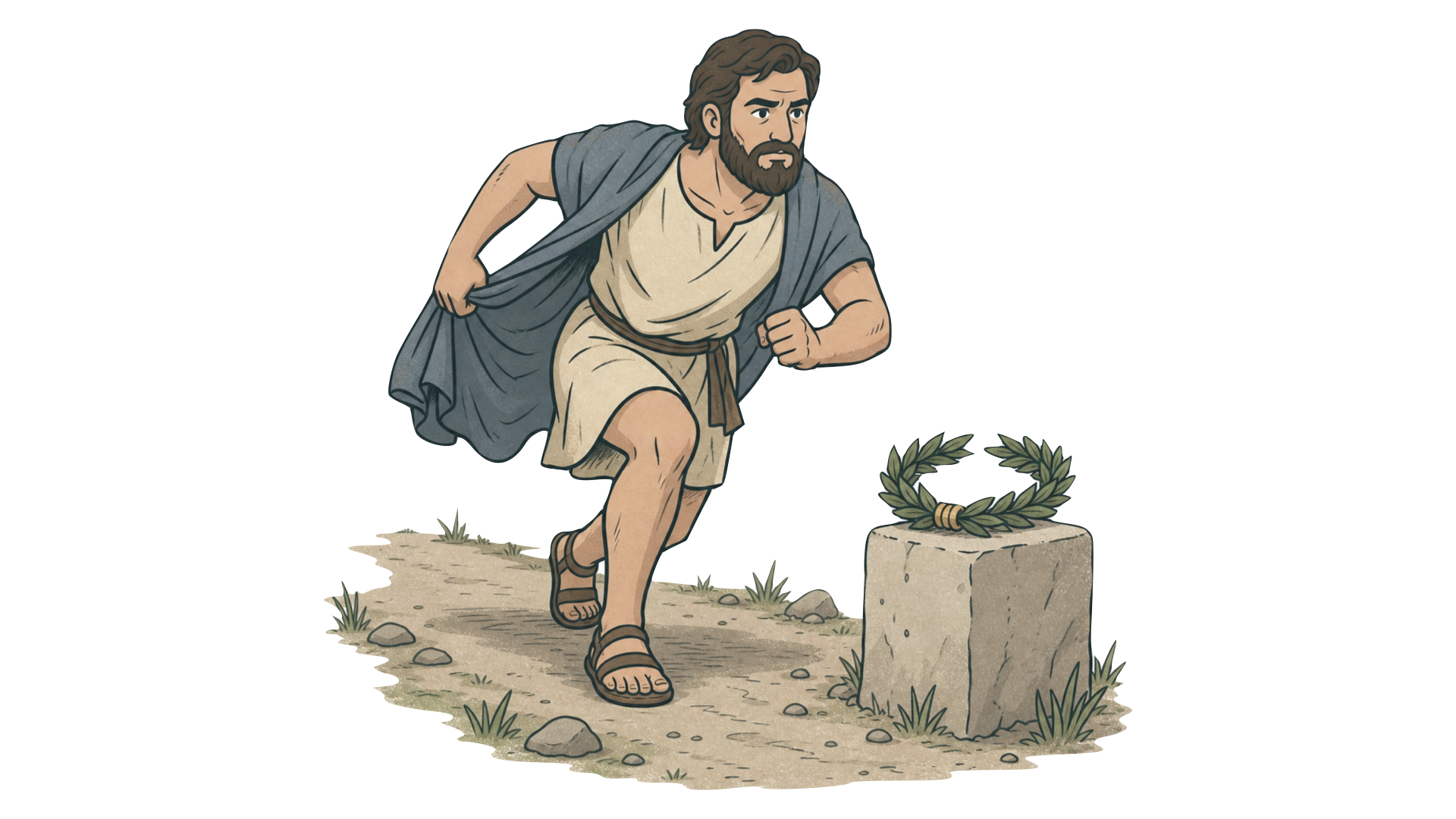
During our discussions on May 9, 2026, we explored 1 Corinthians chapter 9. In this chapter, Paul continues the theme from chapter 8 about laying aside our rights for the good of others and the sake of the gospel. He defends his apostleship and his right to be supported financially, even though he has chosen not to use that right. He lists the rights he has as an apostle, such as the right to eat and drink, be financially supported and to take along a believing wife, rights that other apostles like Cephas (Peter) utilized (1 Corinthians 9:3-6). Paul then uses several illustrations—a soldier, a vineyard planter, a shepherd, and the law about not muzzling an ox—to argue that it is just for those who preach the gospel to get their living from it (1 Corinthians 9:7-14). However, the key to the passage is Paul's deliberate choice to surrender this right. He explains that he endures all things "so that we will cause no hindrance to the gospel of Christ" (1 Corinthians 9:12). His motivation was to become a "slave to all, so that I may win more" (1 Corinthians 9:19), adapting his approach to save some by becoming "all things to all men" (1 Corinthians 9:22). The chapter concludes with the powerful analogy of an athlete who runs a race with intense discipline and self-control, not for a temporary prize, but for an "incorruptible" one (1 Corinthians 9:24-27).
2. What is God revealing about humanity?
This passage reveals a fundamental tension within our human nature. We have been given incredible freedom and rights in Christ, yet we often struggle to lay those rights aside for the benefit of someone else. We tend to cling to our freedoms and privileges without considering how our actions might hinder another person's journey toward the gospel. The passage also highlights our natural inclination to run the "wrong race," one defined by the world's rules where the goal is to be the greatest and assert our rights. Paul's example shows that the Christian race is one of humility, service, and sacrifice. Living this counter-cultural life doesn't come naturally; it requires immense discipline to fight against our selfish desires. As we discussed, becoming "all things to all people" isn't a generic principle; it demands a real relationship. We can't understand what might be a stumbling block for others if we don't invest time in their lives. This also means we must be willing to accept help from others, an act of humility that goes against our pride.
3. What is God revealing about Himself?
Through Paul's words and actions, God reveals that the heart of the gospel is centered on sacrifice, service, and submission. Paul’s willingness to give up his rights is a direct reflection of Jesus himself, who laid aside His divine rights and humbled Himself to the point of death on a cross. God's plan isn't about power in the worldly sense; He works through selfless love. While God intends for His workers to be supported (1 Corinthians 9:14), He deeply values Christ-minded sacrifice. Paul's work is his "work in the Lord" (1 Corinthians 9:1), meaning it is God working through him. This is crucial because sacrificing our rights is not our human nature; it is only possible through the "mind of Christ" (1 Corinthians 2:16) that God gives us. God’s ultimate desire is that the gospel goes forth without any "hindrance" (1 Corinthians 9:12), and this is achieved not by believers demanding their rights, but by them willingly setting those rights aside to serve others, embodying the very message they proclaim.
4. How should our lives change?
This passage should challenge us to take a hard look at our own lives and ask: are there any "rights" we are clinging to that might be a stumbling block for someone else? Paul's example calls us to a higher standard of love where we proactively consider how our legitimate choices might impact others. As one club member stated, a foundational step is to "pray for a heart that loves other people more," because without genuine love, this becomes a hollow exercise. We need to actively check how we are running our "race." Are we running with purpose and discipline, or are we just "beating the air"? This means being intentional about how our actions and words affect those around us. As was pointed out, winning in God's kingdom isn't about getting the highest score, but the lowest—it's about who is willing to give up the most for others. We must practice this by actively working to "discipline" our bodies and desires so they don't control us (1 Corinthians 9:27), and by humbly accepting help from others. The core application is to get out of ourselves—our pride and comfort—to serve others and remove barriers to the gospel, so that we "may by all means save some" (1 Corinthians 9:22).