We Have This Treasure in Earthen Vessels (2 Corinthians 4)
2 Corinthians 4
This is a recap of our Bible Caller Club meeting on May 22nd, 2026 over this passage. If you want to join the club and attend future meetings and study with us via phone, click here.
Context:
In our study on May 22, 2026, we continued in the book of 2 Corinthians. The group saw that this section continues Paul's defense of his ministry to the Corinthian church, where his emphasis is on how the glory of the gospel is revealed through suffering and weakness, not through worldly strength.
1. What’s happening in this passage?
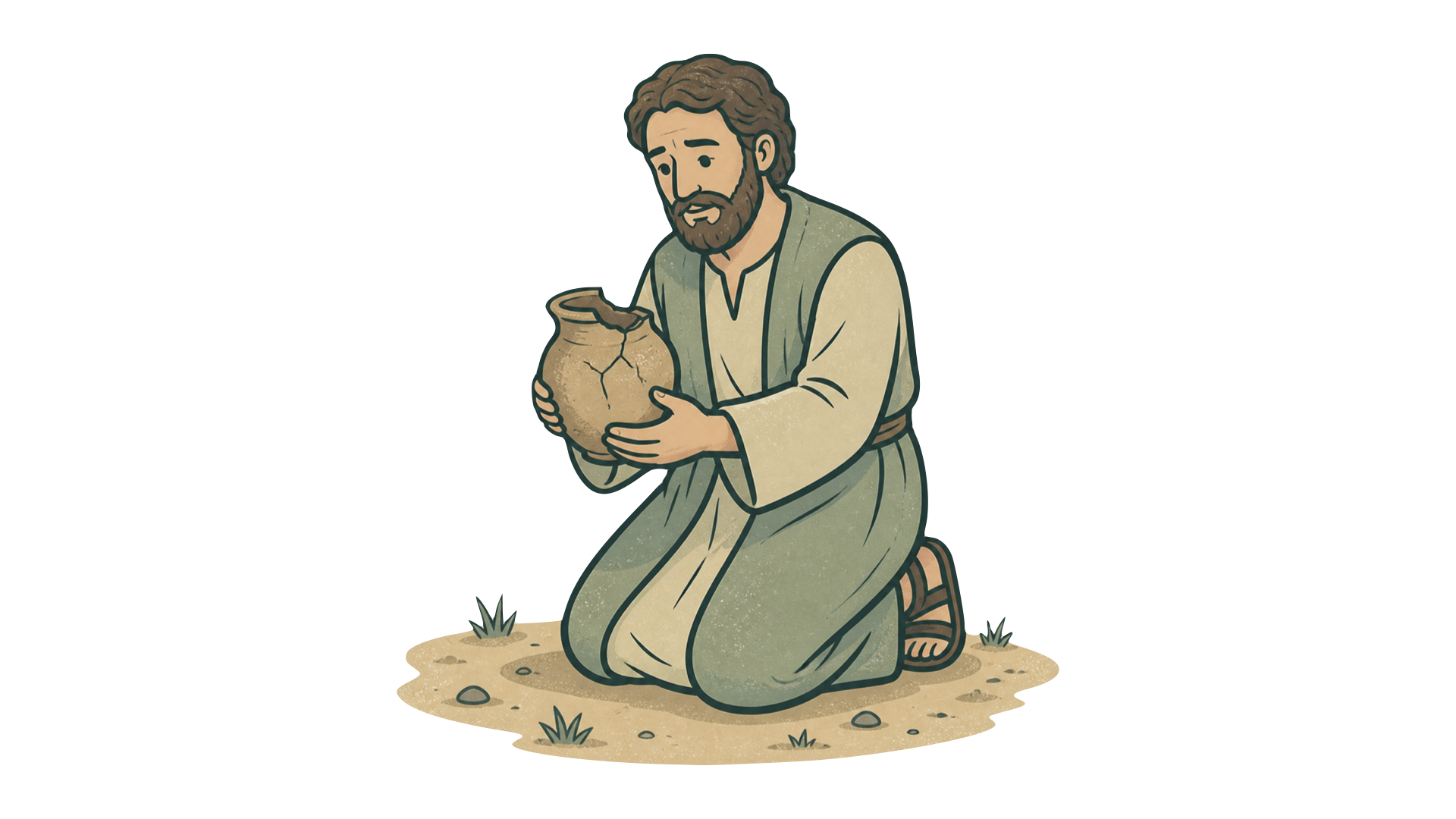
In our study tonight, we read through 2 Corinthians chapter 4 and prepared to dive into chapter 5. Paul begins by stating that because he and his fellow ministers have received this merciful ministry, they "do not lose heart" (v. 1). They have renounced shameful, hidden ways and do not distort God's word for personal gain. Paul then addresses why the gospel might seem "veiled" to some, explaining that "the god of this age has blinded the minds of the unbelieving" so they cannot see the light and glory of Christ (vv. 3-4). A key distinction was made that their preaching is not about themselves but about "Jesus Christ as Lord" (v. 5). The central metaphor was then introduced: "we have this treasure in earthen vessels" (v. 7). As we discussed, this means the glorious treasure of the gospel is held within fragile, breakable human bodies, so that the immense power displayed is clearly from God, not from us. Paul then lists paradoxes to describe his experience: afflicted but not crushed, perplexed but not despairing, persecuted but not forsaken, struck down but not destroyed (vv. 8-9). This state of "dying" to self allows the life of Jesus to be made manifest in their mortal bodies (vv. 10-12). Paul concludes the chapter by again encouraging believers not to lose heart, contrasting the decaying "outer man" with the "inward man," which is being renewed daily. He frames all earthly suffering as a "momentary light affliction" that is producing an "eternal weight of glory" (vv. 16-17), urging a focus on the unseen eternal things (v. 18).
2. What is God revealing about humanity?
In our discussion, we noted several truths about the human condition. First and foremost, we are "frail human vessels" (v. 7). We are weak, fragile, and subject to decay and death (v. 16), but this weakness is the very point, as it’s where God’s strength is best displayed. One club member pointed out that our attitude through trials is critical; we will be "struck down," but we have a choice not to be "destroyed" (v. 9). We learned that humans can be tempted to walk in "craftiness" or adulterate God’s word (v. 2) and have a tendency to "preach ourselves" instead of Jesus (v. 5). The passage also highlights that some are blinded by Satan, the "god of this age" (v. 4). As our study group discussed, without God, humanity is lost and operates without a moral compass. As one person put it, people are increasingly "living according to the desires of the flesh," acting on impulse without accountability, which is the logical conclusion for a life without God, as Paul warned: "eat and drink, for tomorrow we die" (1 Corinthians 15:32).
3. What is God revealing about Himself?
Our group found this passage rich with revelations about God’s character. A powerful insight shared was that God chooses to place His priceless treasure—the gospel—into fragile "jars of clay" (v. 7), and the value of that treasure is not diminished by its humble container. God is merciful and doesn't want us to lose heart. It is God who "has shone in our hearts to give the light of the knowledge of the glory of God" (v. 6), commanding light to shine out of darkness. All power and glory belong to Him, not us. He is the one who sees the bigger picture beyond our temporary trials (v. 18) and doesn't abandon us in our affliction; though we are persecuted, we are "not forsaken" (v. 9). The ultimate demonstration of His power is knowing that the same God "who raised the Lord Jesus will raise us also with Jesus" (v. 14). He promises that our suffering is not in vain but is producing something of incomparable worth (v. 17).
4. How should our lives change?
This study provided several clear applications for our lives. The primary takeaway for our group was to "not lose heart" (vv. 1, 16) and to remember that our earthly tribulations are temporary when compared to the eternal glory God is preparing for us (v. 17). As one member put it, we should welcome trials because we know they will make us stronger in Christ as our "inner man is being renewed day by day." Another member brought up a powerful application from verse seven: our "vessel" is often already full of worldly things. We must consciously empty ourselves of our pride and self-centeredness to make room for God to fill us with His treasure and His light. This means we must stop "preaching ourselves" and instead live in a way that preaches "Jesus Christ as Lord" (v. 5). Finally, as one person’s notes reminded us, we must show the joy of being a Christian even in hard times, letting our light shine so that people can see our joy comes from God alone.