Children Of The Free Woman (Galatians 4:19-31)
Galatians 4:19-31
This is a recap of our Bible Caller Club meeting on June 6th, 2026 over this passage. If you want to join the club and attend future meetings and study with us via phone, click here.
Context:
As a quick recap from our study on Saturday, June 6, 2026, the apostle Paul has been writing to the Galatian churches because they were being misled by false teachers. These teachers, called "the party of the circumcision," were insisting that Gentile Christians had to obey the Old Testament law, including circumcision, to be saved, which Paul calls a false gospel. Paul's main point throughout the book is that we are justified by faith in Jesus Christ, not by works of the law (Galatians 2:16).
1. What’s happening in this passage?
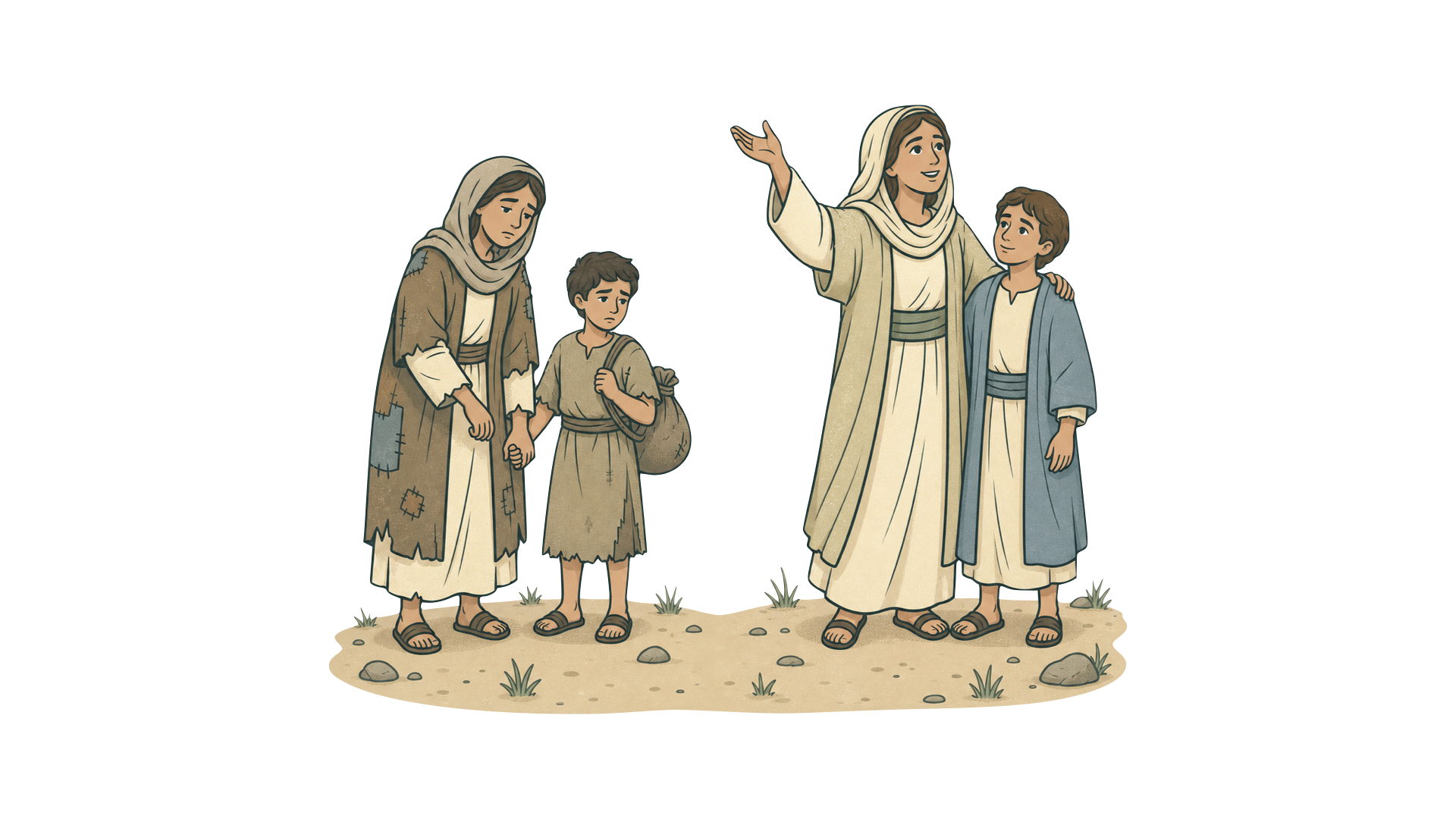
In our study tonight, we looked at the second half of Galatians chapter 4, where Paul continues his argument against the false teachers. He addresses those who "want to be under law" (v. 21) and uses a story they would know well—the story of Abraham, Sarah, and Hagar—to make his point. Paul explains this story as an allegory. The two women, he says, represent two covenants (v. 24). Hagar, the servant woman, represents the covenant from Mount Sinai, which leads to slavery. He connects this to the "present Jerusalem" and those who are trying to live by the flesh. Sarah, the free woman, represents the new covenant and "the Jerusalem above," which is free (v. 25-26). Her son, Isaac, was born not through human effort but through God's promise. As one club member highlighted, Paul is using the very Old Testament scriptures his opponents revered to show them they were choosing slavery over freedom. Paul quotes the Old Testament, "Rejoice, barren woman" (v. 27), to show that our spiritual inability is actually a cause for joy, because it highlights God's power to fulfill His promise, not our own ability to save ourselves. He also points out that just as Ishmael (born of the flesh) persecuted Isaac (born of the promise), there is now conflict between those who live by the flesh and those who live by the Spirit (v. 29). The passage concludes with the scriptural command to "cast out the servant woman and her son," making the point that we are children of the free woman, not the servant (v. 30-31).
2. What is God revealing about humanity?
This passage revealed a lot about our human nature. As one club member pointed out, we often dislike it when things don't go according to our plans, and our tendency is to take matters into our own hands, just like Abraham and Sarah did with Hagar. The Galatians were doing the same thing by trying to justify themselves through their own efforts, which Paul calls living "according to the flesh" (v. 23). This desire for control leads to spiritual slavery. In our discussion, we noted that humanity has a choice between two incompatible paths: being enslaved to the flesh or being free through faith. These two mindsets cannot coexist peacefully and inevitably cause division within the church (v. 29). Another key insight from our group was about our spiritual "barrenness." It seems strange, but we are meant to recognize and even celebrate that we cannot bring about spiritual life on our own. It has to come from God, and that's actually a good thing because it removes the burden of self-justification.
3. What is God revealing about Himself?
Our group discussion highlighted several beautiful truths about God's character. First and foremost, God’s desire for us is freedom, not slavery (v. 22-23). It is Christ who sets us free. We also saw that God blesses the "barren"—those who recognize their spiritual inability to save themselves—because it is in our weakness that His power to give new life is most clearly seen (v. 27). As someone in our study said, God wants us to trust His promise and His timing, not our own. Abraham and Sarah failed to wait on God's timing, but His plan still prevailed. This is a reminder that even when we think time has run out, God’s timeline is what matters. Finally, we learned that God reserves His promised inheritance for those who are children of the promise, justified by faith, not for those who rely on the flesh (v. 30).
4. How should our lives change?
This passage gave us several practical takeaways. The clearest application, as one member noted from the following verse (Galatians 5:1), is that we must "stand firm" in the freedom Christ has given us and not fall back into the slavery of trying to earn our salvation. We need to actively "cast out" the false idea that we can justify ourselves by our works and fully embrace our true identity as "children of the free woman" (v. 31). Another person in our study connected this to a concept from Paul's other letters: we should rejoice in our weakness and our spiritual barrenness, because that is where God's glory shines through. We also have to recognize and expect that living by the Spirit may lead to conflict or persecution from those living by the flesh, just as Isaac was persecuted by Ishmael (v. 29). But as we discussed, this is good news! We have freedom in Christ, and as one person put it, "we should be happy, we should be excited, and we should live like it."