The Fruit Of The Spirit (Galatians 5)
Galatians 5
This is a recap of our Bible Caller Club meeting on June 7th, 2026 over this passage. If you want to join the club and attend future meetings and study with us via phone, click here.
Context:
In our Bible study on June 7th, 2026, we continued our journey through the book of Galatians. In the previous chapters, Paul had been addressing the Galatians who were deserting the true gospel for a false one, which taught that justification came through works of the law, specifically circumcision, rather than by faith in Jesus Christ (Galatians 2:16). Paul has already compared living by faith to being children of the free woman, Sarah, and living by the law to being children of the slave woman, Hagar, urging them to embrace their freedom.
1. What’s happening in this passage?
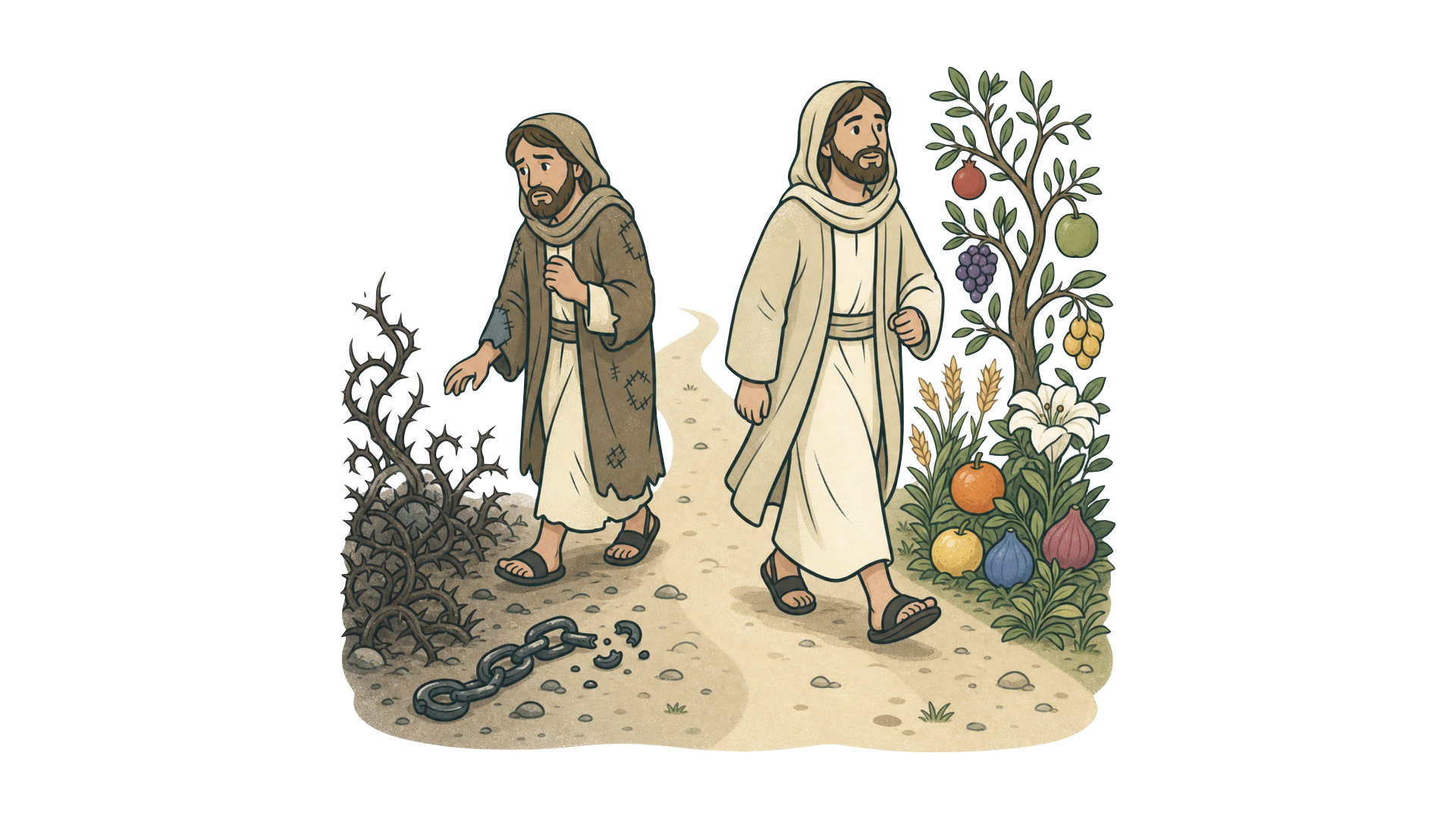
In our study tonight, we explored all of chapter five. The chapter opens with a powerful declaration: "It was for freedom that Christ set us free" (v. 1). Paul urges the Galatians to stand firm in this freedom and not return to the slavery of trying to follow the law for justification. He then gives a stark warning: if they accept circumcision as a requirement for salvation, Christ will be of no benefit to them, because they would be obligated to keep the entire law and, in doing so, would be "severed from Christ" and have "fallen from grace" (v. 2-6). Paul expresses his frustration, asking who hindered them when they were "running well," and warns that "a little leaven leavens the whole lump" (v. 7-9). He uses a bit of sharp, tongue-in-cheek rhetoric, wishing that the Judaizers who were upsetting them would go all the way and mutilate themselves, highlighting his frustration with those causing this division (v. 12). He then shifts to explain that their freedom in Christ is not a license to indulge the flesh, but a call to "serve one another" through love, which fulfills the entire law (v. 13-15). The core of the passage contrasts the "deeds of the flesh" (like sexual immorality, strife, and jealousy) with the "fruit of the Spirit" (love, joy, peace, etc.), explaining that those who belong to Christ have crucified the flesh and must now "walk in step with the Spirit" (v. 16-26).
2. What is God revealing about humanity?
During our discussion, it became clear that this passage reveals a lot about our human tendencies. We saw that it is very easy for us to turn back to old ways, to a "yoke of slavery," even after being set free (v. 1). We are prone to being "hindered" and persuaded away from the truth we once followed (v. 7). As one club member pointed out, it only takes "a little leaven" of fleshliness or false teaching to begin corrupting an entire community (v. 9). We also learned that our default state, without the Spirit's guidance, is to carry out the desires of the flesh, which are inherently selfish and are in direct opposition to the Spirit (v. 16-17). The passage makes it plain that if we try to justify ourselves by our own actions, even in part, we have fallen from grace because we've rejected God's free gift. Ultimately, if we live according to the flesh, we will not inherit God's kingdom (v. 21).
3. What is God revealing about Himself?
This chapter beautifully reveals God's character and plan. It was highlighted in our study that it is Christ who sets us free from the impossible task of observing the law for salvation (v. 1, 6). God has called us to freedom, not slavery (v. 13). We also see that His Spirit is the power that enables us to overcome the works of the flesh; if we are led by the Spirit, we are not under the law (v. 16, 18). Furthermore, God's nature is seen in the "fruit of the Spirit"—love, joy, peace, patience, kindness, goodness, faithfulness, gentleness, and self-control are all attributes that flow from Him (v. 22-23). God is also a just God who will not allow those who persistently practice the deeds of the flesh to inherit His kingdom (v. 21). We learned that we "belong to him," and because of that relationship, he gives us a way to live, a cadence to follow as we "keep in step with the Spirit" (v. 24-25).
4. How should our lives change?
Reflecting on this passage, we identified several key applications for our lives. First and foremost, we must consciously "stand firm" in our freedom and resist any teaching or mindset that would subject us to a "yoke of slavery" like legalism (v. 1). We must stop trying to justify ourselves by our own works, because the moment we do, we have rejected grace (v. 4). Instead, our lives should change by actively choosing to "walk by the Spirit" so that we do not carry out the fleshly desires that are so natural to us (v. 16). This means we must be diligent to "get the leaven out" of our lives—those things that promote the works of the flesh (v. 9). As we walk by the Spirit, we are called to love our neighbors as ourselves, serving one another instead of biting and devouring each other (v. 14-15). Ultimately, because we belong to Christ, we must daily "crucify the flesh with its passions and desires" and intentionally "keep in step with the Spirit," allowing His fruit to grow in our lives (v. 24-25).