Bear One Another's Burdens (Galatians 6)
Galatians 6
This is a recap of our Bible Caller Club meeting on June 8th, 2026 over this passage. If you want to join the club and attend future meetings and study with us via phone, click here.
Context:
In our study on Saturday, June 8th, 2026, we finished the book of Galatians. The overall context is that the Galatian church was abandoning the true gospel of justification by faith in Jesus and instead adopting a false gospel that required circumcision and works of the law for salvation (Gal. 1:6, 5:2). This passage, chapter six, flows directly from chapter five's command to "walk in step with the spirit" and serves as a practical conclusion, explaining what living by the Spirit looks like in community.
1. What’s happening in this passage?
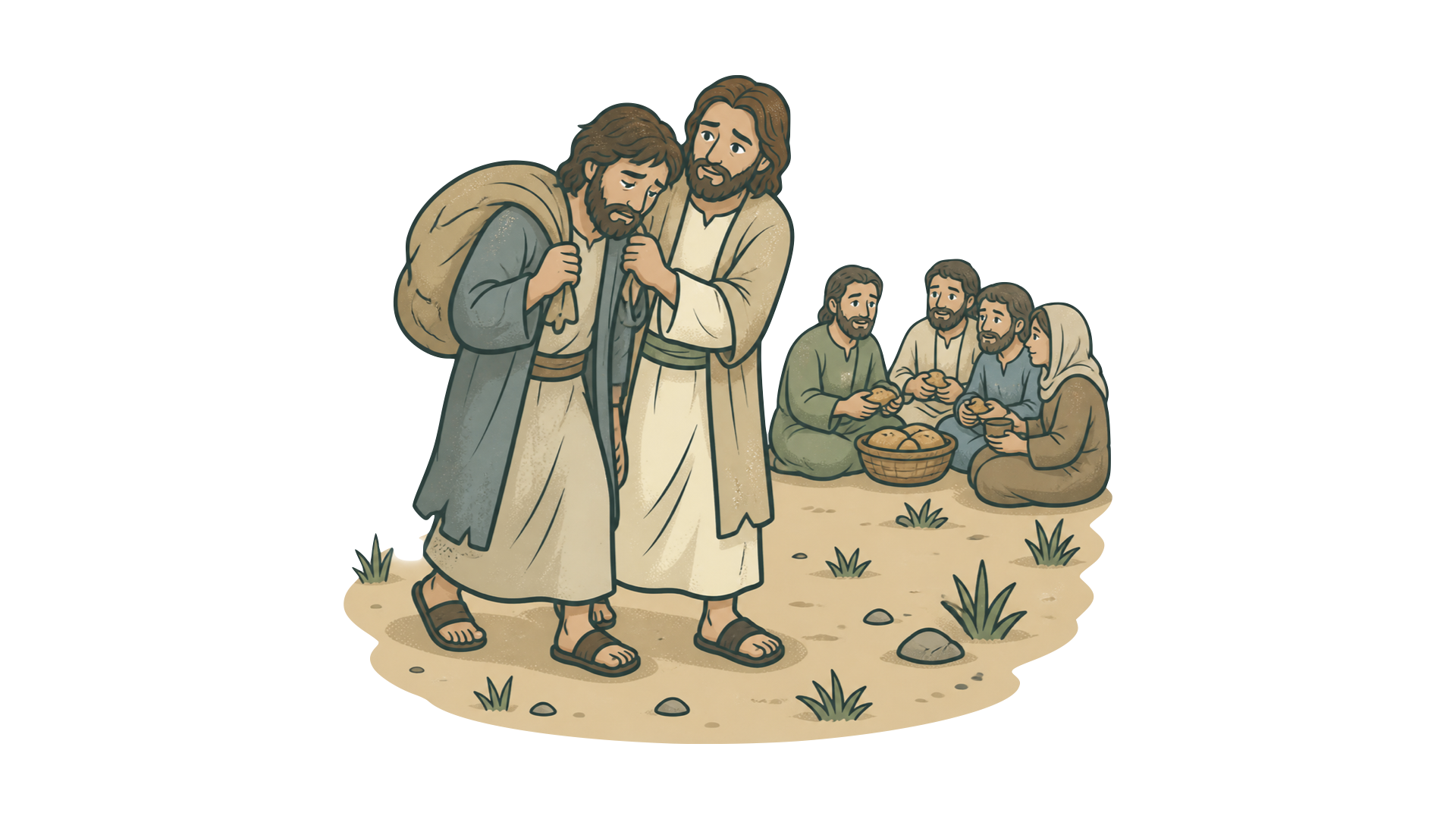
In our study tonight, we walked through the final chapter of Paul's letter to the Galatians. Paul begins by instructing the "spiritual" members of the church on how to handle a fellow believer caught in sin. The instruction is to restore that person gently, all while being careful not to fall into temptation themselves (v. 1). This leads to the command to "Bear one another's burdens, and so fulfill the law of Christ" (v. 2), a direct contrast to self-important pride. Paul warns them not to think too highly of themselves, but to examine their own work, because ultimately, each person is responsible for their own actions (v. 3-5). Next, the passage explains the principle of sowing and reaping (v. 6-10). As one member explained, this section encourages sharing good things, especially with teachers of the Word. Paul makes it clear that God is not mocked; if you sow to please the flesh (selfishness, hatefulness), you will reap corruption, but if you sow to please the Spirit (love, joy, peace), you will reap eternal life. Paul then makes his final appeal, noting he is writing in large letters with his own hand for emphasis (v. 11). He calls out the motives of the "party of the circumcision," explaining they only want the Galatians to be circumcised to avoid persecution and to boast in their flesh, even though they don't keep the law themselves (v. 12-13). Paul's only boast is in the cross of Jesus, which has crucified him to the world and the world to him (v. 14). He declares that what matters is not circumcision or uncircumcision, but being a "new creation," and offers a blessing of peace and mercy upon the "Israel of God"—those who live by this new rule of faith (v. 15-16). He concludes by telling them not to cause him any more trouble, as he bears the marks of Jesus on his body as proof of his suffering for the gospel, and he blesses them with the grace of the Lord Jesus Christ (v. 17-18).
2. What is God revealing about humanity?
Our discussion highlighted several truths about our human nature revealed in this chapter. We learned that we are susceptible to being "caught in transgression" and are weak, easily tempted by the flesh (v. 1). We all carry burdens and need each other's help (v. 2). One member pointed out that we can deceive ourselves into thinking we are something important when we are nothing (v. 3). Furthermore, a key insight was that we are often hypocrites; as verse 13 notes, even those pushing the law on others fail to keep it themselves. The motivation behind living for the flesh is often a desire to take the path of least resistance, to "make a good showing" and avoid persecution by fitting in with the world (v. 12). The principle of "what goes around comes around" is also a deeply human truth found here; we will inevitably reap what we sow (v. 7).
3. What is God revealing about Himself?
Throughout our study of this passage, we saw several aspects of God's character. God desires a community where we bear one another's burdens, which is how we fulfill the "law of Christ"—the law of love (v. 2). It was made clear that God cannot be mocked; our actions have consequences, and we cannot fool him by living for the flesh while claiming to follow him (v. 7). We also learned that God is the source of our transformation. When we sow to the Spirit, it is His Spirit that produces eternal life in us (v. 8). One powerful point raised was that God, through the cross of Jesus, is the only legitimate reason for us to boast, as we can never save ourselves (v. 14). He is the God of the "true Israel," the spiritual family of faith, not one defined by fleshly ordinances (v. 16). Finally, God is the one who gives true grace, and He desires that this grace be with our spirits (v. 18).
4. How should our lives change?
We concluded that this passage calls for specific changes in our lives. We should actively seek to gently restore those caught in sin, while simultaneously examining ourselves to avoid temptation (v. 1). We are called to bear the burdens of others (v. 2) and abandon self-important attitudes (v. 3). We must embrace personal responsibility for our own actions and choices, recognizing that we must "bear our own load" (v. 5). In our actions, we must stop trying to mock God and instead intentionally "sow to the Spirit" by cultivating love, joy, and peace, trusting that we will reap a harvest if we don't give up (v. 7-9). As one club member pointed out, we should make it a priority to do good to everyone, especially our brothers and sisters in Christ (v. 10). Ultimately, we should boast in nothing but Jesus and the cross, crucifying the world's values in our lives and welcoming the grace of Christ to empower us to live by the Spirit (v. 14, 18).