A God of Peace, Not Confusion (1 Corinthians 14:26-40)
1 Corinthians 14:26-40
This is a recap of our Bible Caller Club meeting on May 15th, 2026 over this passage. If you want to join the club and attend future meetings and study with us via phone, click here.
Context:
In our study on May 15, 2026, the Apostle Paul has been writing to the Corinthian church to help them see every part of their lives, including corporate worship, through the lens of the gospel. This means applying principles of sacrifice, service, and submission for the good of others, a theme flowing from his discussion on spiritual gifts in chapter 12 and the famous "love chapter," chapter 13.
1. What’s happening in this passage?
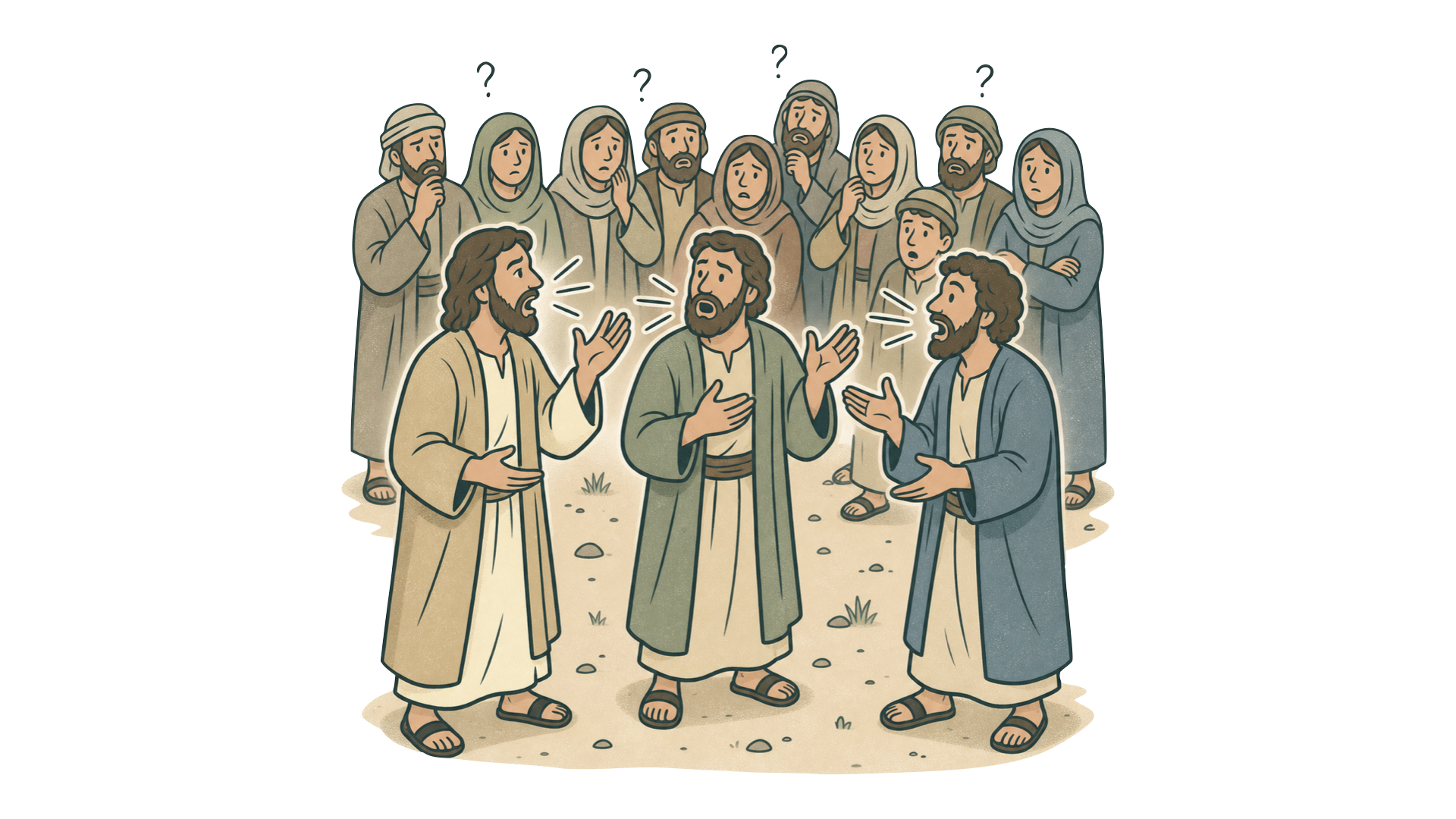
In our study tonight, we finished 1 Corinthians 14 by looking at verses 26-40. Paul gives the Corinthian church specific, practical instructions for how their worship services should be conducted. He starts by establishing a key principle: "Let all things be done for edification" (v. 26). He then outlines rules for orderliness: if someone speaks in a tongue, it should be limited to two or at most three people, one at a time, and only if there is someone to translate (vv. 27-28). Similarly, prophets should speak one by one, with others evaluating what is said, and if a new revelation is given to someone sitting, the first speaker should be silent (vv. 29-31). Paul emphasizes that women should remain silent in the church services, submitting themselves and asking their husbands questions at home (vv. 34-35). He concludes the chapter by restating his main point: "all things must be done properly and in an orderly manner" (v. 40), because God is a God of peace, not confusion (v. 33).
2. What is God revealing about humanity?
One club member pointed out that this passage reveals our tendency toward "selfish hearts." In our group discussion, we noted that the Corinthian believers were clamoring for the flashier spiritual gifts to exalt themselves rather than serve others. It seems humanity has a natural desire for attention, preferring what is sensational over what genuinely builds up the community. Another person in our study connected this to the time of the Judges when "every man did what was right in his own eyes." Without godly order, we gravitate toward being loud and seen, which ultimately leads to chaos instead of edification. We have two possible attitudes in worship: one that seeks to elevate ourselves, and one that seeks to give, submit, and elevate God.
3. What is God revealing about Himself?
Our group concluded that this passage reveals God as a God of peace, order, and unity. As it says plainly in verse 33, "God is not a god of confusion but of peace." He desires harmony and function within His church. One member made a powerful connection to the creation account, noting how God took a formless chaos and created order, function, and beauty from it. This is His pattern. When His people conduct themselves with love and order, outsiders will be convicted and "fall on his face and worship God declaring that, ‘Surely God is among you’” (v. 25). The peace God brings, we discussed, is like the Hebrew concept of "shalom"—a sense of completeness, wholeness, and beautiful functionality that He wants for His people.
4. How should our lives change?
The main takeaway for our group was that we must actively choose to elevate God and humble ourselves in every part of our lives, but especially in corporate worship. We should strive for order and purpose in all we do, ensuring our actions are meant to edify others, not for our own glorification. This challenges us to approach worship with a new mindset: "What can I bring to edify someone else?" Instead of just coming to "recharge our batteries," we should come with the purpose of giving—whether it’s a smile, a kind word, or a willingness to be uncomfortable for another’s benefit. As one person summarized, we must "choose peace over chaos." Everyone is called to submit in some way for the good of others, and when we follow God’s pattern of love and order, we bring Him glory.