“Surely God is Among You” (1 Corinthians 13:1-14:25)
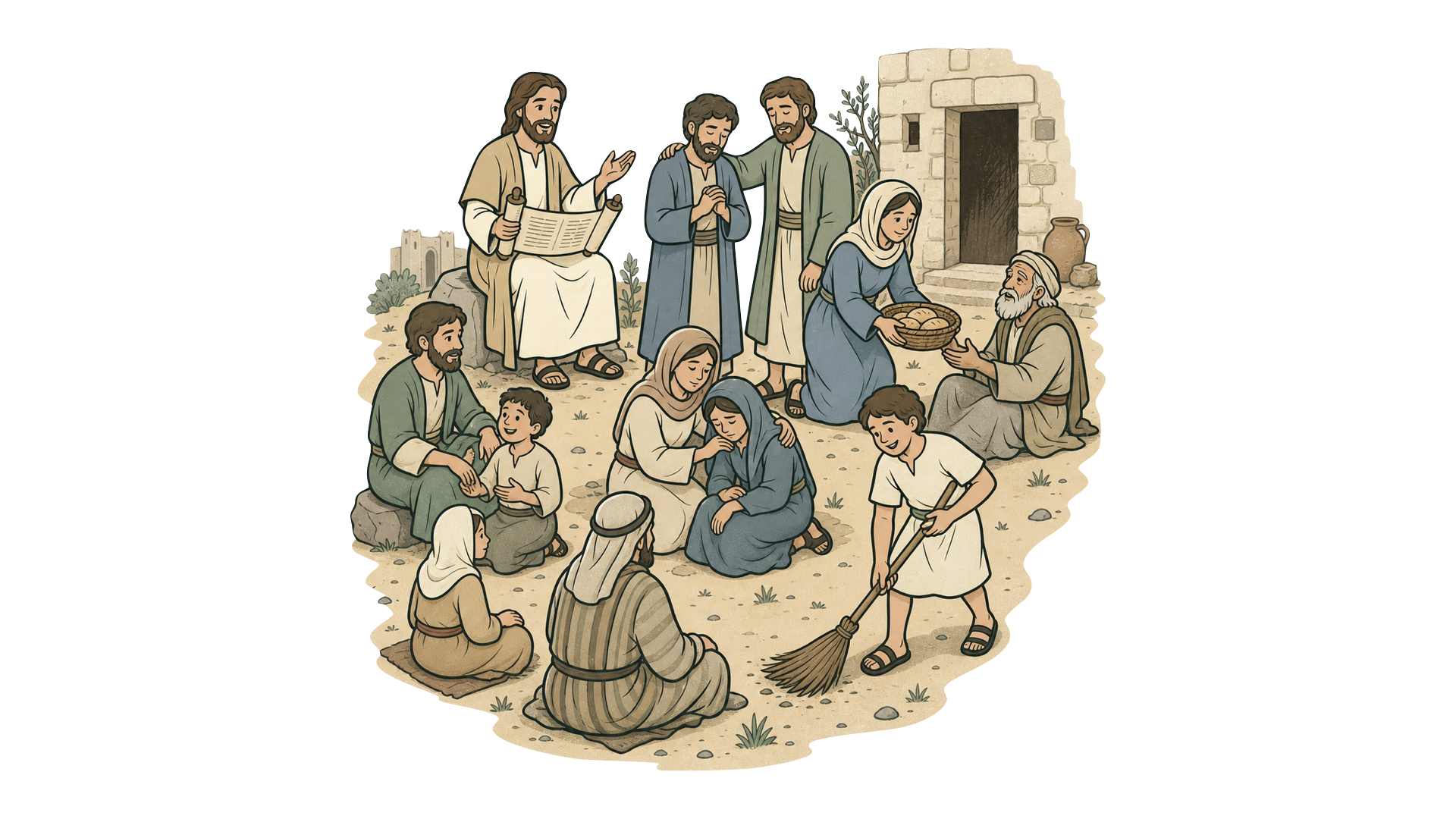
1 Corinthians 13:1-14:25
This is a recap of our Bible Caller Club meeting on May 13th, 2026 over this passage. If you want to join the club and attend future meetings and study with us via phone, click here.
Context:
In our study on the evening of May 14, 2026, we reviewed how the Apostle Paul has been addressing various problems in the Corinthian church. As our group discussed, the central theme of the book is learning to see every part of life through the lens of the gospel, which Paul presents as a life of sacrifice, service, and submission, modeling the mind of Christ. This passage follows a discussion on the misuse of spiritual gifts, where church members were either feeling unimportant or acting superior to others, and Paul now presents love as the solution and shows how to put it into practice.
1. What’s happening in this passage?
Tonight, we covered a lot of ground, diving into two significant chapters. In chapter 13, Paul presents love as the "more excellent way" (1 Corinthians 12:31). He begins by explaining that even the most impressive spiritual gifts—like speaking in tongues, prophecy, immense knowledge, faith that can move mountains, and extreme self-sacrifice—are worthless without love (1 Corinthians 13:1-3). He then gives a beautiful and challenging description of what love is: patient, kind, not jealous or boastful, not arrogant or rude, and so on (1 Corinthians 13:4-7). As one club member pointed out, this description was the exact opposite of how the Corinthians had been behaving. Paul concludes the chapter by emphasizing that while gifts like prophecy and tongues will eventually cease, faith, hope, and love will remain, with love being the greatest of them all (1 Corinthians 13:8-13).
In chapter 14, Paul applies this principle of love directly to their worship services. He contrasts the gifts of speaking in tongues and prophecy, explaining that prophecy is more desirable in the church because it builds up, encourages, and consoles others (1 Corinthians 14:3). Speaking in tongues without an interpreter, he argues, only edifies the individual, not the whole church. The main point of the chapter, as we noted in our study, is summed up in verse 12: "So also you, since you are zealous for spiritual gifts, seek to abound for the edification of the church." The goal of any gift is to build up the community of believers in an orderly and understandable way, so that even an outsider might be convinced and declare, "Surely God is among you" (1 Corinthians 14:25).
2. What is God revealing about humanity?
Our discussion tonight highlighted some key truths about human nature. We tend to desire the "flashy" gifts, the ones that draw attention to us and make us look good, rather than the quiet, background acts of service. It’s in our nature to want to pat ourselves on the back. As one member illustrated using Paul's analogy of musical instruments (1 Corinthians 14:7-8), when we act without love, our efforts are like an indistinct, garbled noise. We may be busy, but we are not purposeful, and our actions become pointless chaos. We have a tendency to want to serve, but often in a way that puffs us up instead of truly building up others. Because of this, love is a foreign, supernatural concept that we have to be taught. We are prone to selfishness, turning the "we" of the church into a "me" thing, and Paul has to correct this by reminding us to put God first, others second, and ourselves last.
3. What is God revealing about Himself?
Though God isn't the direct subject of every verse, our study revealed profound things about His character. As one member insightfully noted, God is not asking anything of us that He hasn't already done Himself. The very definition of love in chapter 13 is a portrait of Jesus. We were reminded of 1 John 4:8, which says, "God is love." He is the source of love and the perfect example of it. Furthermore, all the spiritual gifts, which the Corinthians were using selfishly, come from God in the first place (1 Corinthians 12:4). He is the one who empowers and organizes them for His purpose. Perhaps most powerfully, God’s presence is made known through our love for one another. When we use our gifts not for our own glory but to build each other up, an outsider can look at us and declare, "Surely God is among you" (1 Corinthians 14:25). God is in our midst when love is in our midst.
4. How should our lives change?
This is where the rubber meets the road. Our group concluded that we must actively and intentionally repurpose our gifts through the lens of love. As one person suggested, we should challenge ourselves to take our talents—whether it’s crafting, teaching, or serving in some other capacity—and use them specifically to show love and build someone else up. We can't just "fake it 'til we make it"; this kind of love must be genuine and comes from God. This means we have to pray for it, asking God to help us grow in the characteristics of love listed in verses 4-7. We must prioritize love above all other gifts, making it the foundation that supports everything we do. It's not about what gifts we have, but about how we use them to serve others. The only way to keep our own "tanks" full enough to keep serving this way is to stay connected to God, who is the source of all love.