“A More Excellent Way” (1 Corinthians 12)
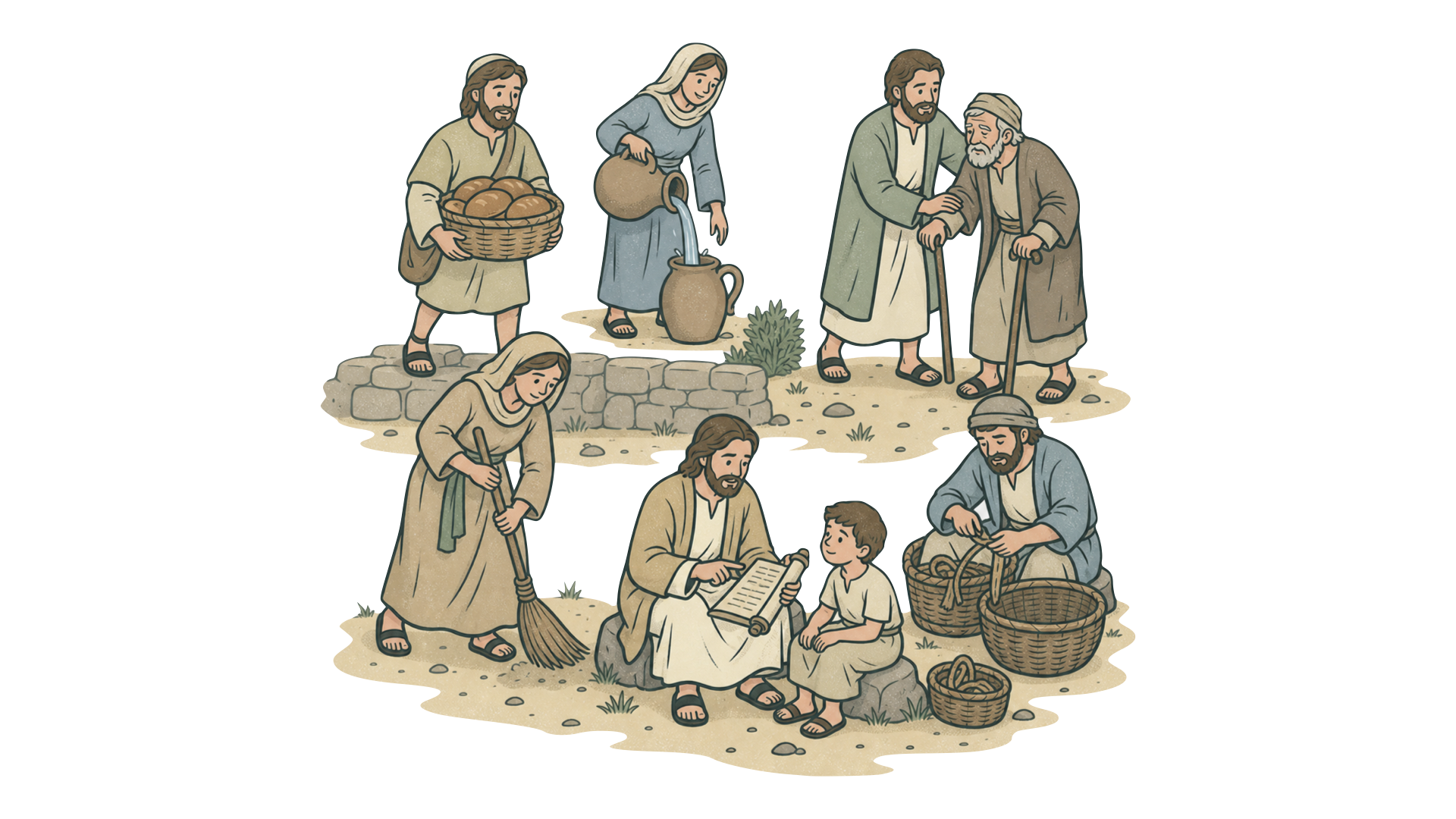
1 Corinthians 12
This is a recap of our Bible Caller Club meeting on May 12th, 2026 over this passage. If you want to join the club and attend future meetings and study with us via phone, click here.
Context:
In our study on the evening of May 12, 2026, we jumped into 1 Corinthians chapter 12. Paul is writing to the Corinthian church to help them see every part of their lives through the lens of the gospel (that is, sacrifice, service, and submission), addressing everything from division to, in this chapter, spiritual gifts, and how they our view of them should lead to unity and service, not division and pride.
1. What’s happening in this passage?
In this chapter, Paul is addressing the Corinthian church’s confusion and division over spiritual gifts. He starts by clarifying that any true confession of "Jesus is Lord" can only happen through the Holy Spirit, a revolutionary idea for new Christians used to many gods (vv. 1-3). He then lists various gifts—like wisdom, faith, healing, and tongues—emphasizing that they all come from the one Spirit for the good of the whole community (vv. 4-11). The passage then uses the powerful analogy of the church as a body. Paul explains that just as a body has many parts (feet, hands, eyes), the church is one body with many members. He tackles the feeling of inadequacy ("Because I am not a hand, I am not a part of the body") and the feeling of superiority ("The eye cannot say to the hand, I have no need of you"), arguing both attitudes are forms of selfish division (vv. 12-26). He concludes by stating that we are the body of Christ, listing roles God has appointed like apostles, prophets, teachers, and helps, and then uses rhetorical questions like, "Are all apostles?" to show that no one has every gift (vv. 27-30). Finally, he encourages believers to "earnestly desire the greater gifts" before promising to show them a "more excellent way" which is love (v. 31).
2. What is God revealing about humanity?
During our study tonight, we discussed how this passage reveals some core human tendencies, especially our inclination toward comparison and division. As one club member pointed out, we naturally look at others, rate their gifts against our own, and then judge our worth based on that comparison. This leads to two traps. The first is feeling insignificant because our gift isn't as visible, like the foot wanting to be a hand. The other is feeling prideful because we think our role is more important, like the eye looking down on the hand. Another member noted that we tend to desire impressive-looking gifts, like miracles, over quieter ones like "helps" or "administrations" because of a human desire to be noticed. Paul's very structure of asking, "Are all apostles?" serves as a gentle but firm correction to this pride, which was rampant in Corinth and is a tendency God seeks to correct in us.
3. What is God revealing about Himself?
Our group found that this chapter reveals so much about God's character. First and foremost, God is a God of order, unity, and divine appointment. The text says, "God has appointed in the church..." (v. 28) and "But now God has appointed the members, each one of them in the body just as he desired" (v. 18). He is the one who sovereignly designs the church, giving a wide variety of gifts that all originate from the one Spirit, Lord, and God (vv. 4-6). We spent some time discussing how His wisdom is revealed in making the body diverse; He doesn't make us all the same. He values variety and intentionally creates a system where different people must work together. He is the one who equips every believer, ensuring the church is strong, and He desires a community where every member is valued, cared for, and works together to build each other up.
4. How should our lives change?
This passage should fundamentally change how we view ourselves and others in the church. As we talked about, it’s a direct call to humility and a rejection of spiritual pride or envy. We should stop comparing our gifts to others'. Instead of feeling insignificant because we don't have a "flashy" gift, or looking down on someone whose gift seems less important, we should embrace the role God has given us. We were challenged to stop being so hard on ourselves. Instead of thinking "I can't do this," we should trust that God can use us right where we are. We were reminded to "earnestly desire the greater gifts" (v. 31), which, as the group discussed, isn't about selfishly wanting more power but about seeking to be more useful for building up the entire church. As one member suggested for a practical application, we should all try this week to intentionally use one of our gifts, no matter how small we think it is, to serve someone else in the body of Christ in love.