Sown Corruptible, Raised Incorruptible (1 Corinthians 15:35-58)
1 Corinthians 15:1-34
This is a recap of our Bible Caller Club meeting on May 17th, 2026 over this passage. If you want to join the club and attend future meetings and study with us via phone, click here.
Context:
As our group study on May 17th, 2026, continued, we arrived at the second half of chapter 15. The discussion explained that the entire book has been Paul’s effort to get the Corinthian church to see every part of their lives through the lens of the gospel, but they had become so focused on earthly, fleshly matters that they began to doubt or misunderstand the core concept of the resurrection.
1. What’s happening in this passage?
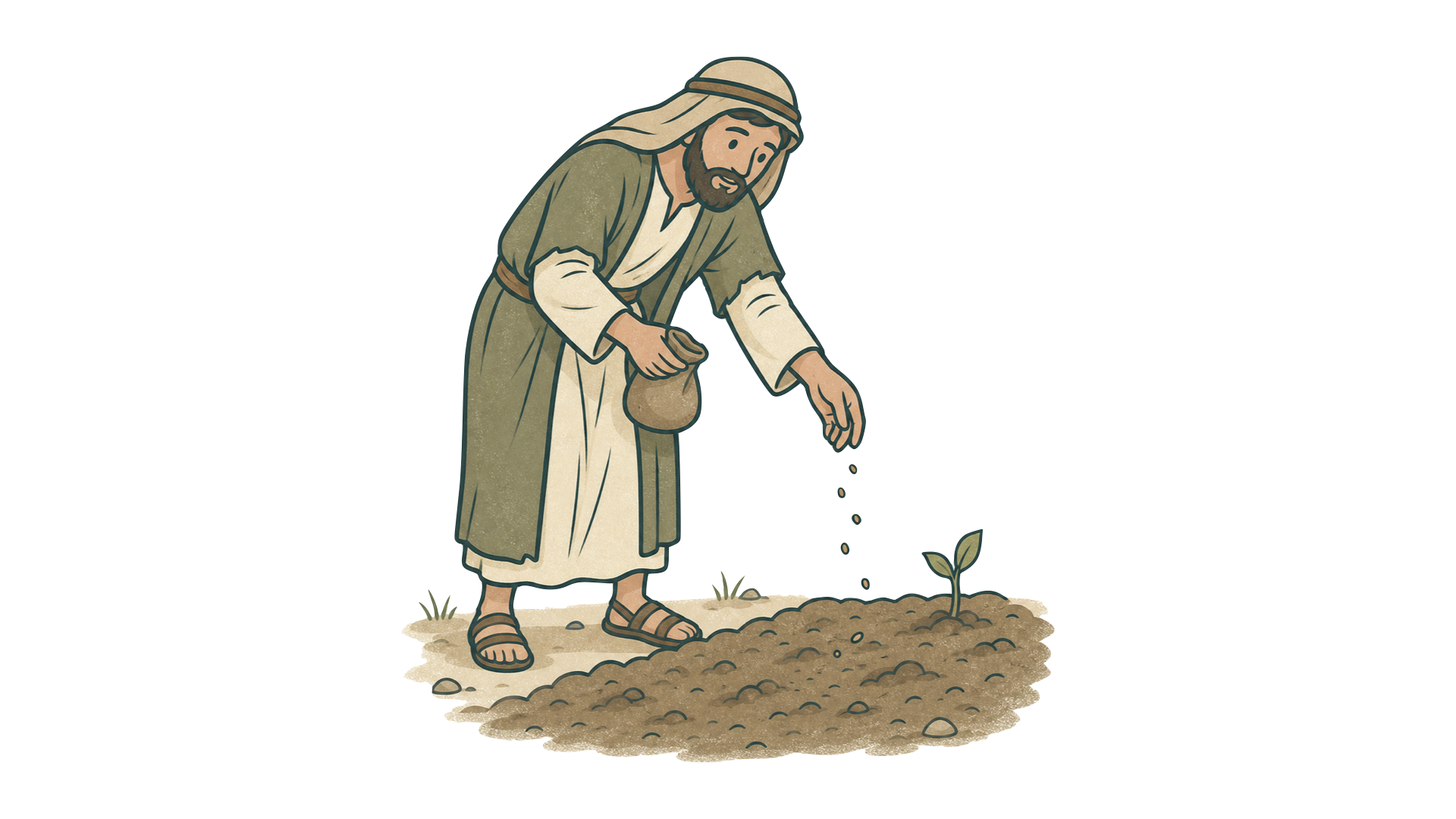
In our study tonight, we examined Paul’s powerful explanation of the resurrection. He begins by addressing a skeptical question: "How are the dead raised? And with what kind of body do they come?" (v. 35). Paul calls this question foolish and uses the analogy of a seed to explain the transformation. Just as a small, bare grain must "die" in the ground to grow into something far more glorious and different, our current, corruptible bodies must be "sown" in death to be raised as new, incorruptible, spiritual bodies (vv. 36-38, 42). He contrasts the earthly and heavenly, the natural and the spiritual, showing that the resurrected body is fundamentally different and superior to our current one (vv. 39-44). Paul then contrasts the "first man, Adam," who was an earthly, living soul, with the "last Adam" (Christ), who is a heavenly, life-giving spirit (vv. 45-49). The passage climaxes with Paul revealing a "mystery": at the last trumpet, the dead will be raised incorruptible and those still living will be changed in an instant, with our mortal bodies putting on immortality (vv. 51-54). This leads to the triumphant declaration that death is "swallowed up in victory," its sting removed through Christ (vv. 54-57). The passage concludes with an encouragement for believers to be steadfast and dedicated to God's work, because this future reality ensures that "your labor is not in vain in the Lord" (v. 58).
2. What is God revealing about humanity?
During our discussion, we noted that this passage highlights how humanity is inherently "fleshly" and, from that limited perspective, finds it almost impossible to grasp spiritual realities like the resurrection. Paul even calls the Corinthians "fools" for their earthly mindset. We are naturally prone to sowing "dishonor and weakness" with our corruptible bodies (v. 43). One member pointed out the contrast between the first Adam, whose self-exaltation brought sin into the world, and the last Adam (Christ), whose humility brought life. This shows that by our nature, we are like the first Adam, and a total transformation is required to become like Christ. As we talked, it became clear that if we live only according to the flesh, we simply cannot understand spiritual things, and death will not be "swallowed up in victory" for us. A death to our old selves is required to truly live.
3. What is God revealing about Himself?
Our group found some wonderful truths about God here. One member shared that God gives us the choice to follow the natural, earthly path or to choose Him and the spiritual path. He is glorious beyond our comprehension, so much so that we "can't even imagine" what our transformed bodies will be like in heaven. The passage explicitly states that God, through Jesus, is a "life-giving Spirit" (v. 45) who "gives us the victory through our Lord Jesus Christ" (v. 57). This victory isn't something we achieve on our own; it is a gift from Him. He is the one who puts sin and death in subjection under His feet, crushing them on our behalf. He is the one who ultimately swallows up death in victory, fulfilling the ancient promise to defeat the serpent.
4. How should our lives change?
As we concluded our study, we looked at the final verse for a direct application. Verse 58 tells us, "Therefore, my beloved brothers, be steadfast, immovable, always abounding in the work of the Lord, knowing that your labor is not in vain in the Lord." As one club member pointed out, this is the natural conclusion to everything Paul has said. We must choose this lifestyle daily, taking up our cross. Another member added that we must remain steadfast even when our efforts seem to hit a dead end or we face rejection, because our work "in the Lord" is never worthless. We discussed the contrast between the "work of the flesh," which is in vain, and the "work of the Lord." If we truly believe in the resurrection, we must live like it, understanding that this earthly body isn't the final story. We are to be immovable and anchored in the truth of Jesus, so that our lives are lived for something greater and our labor will truly have eternal value.